
New $96M STREETS Program Targets Homelessness and Addiction
Published June 29, 2026

A new $96 million federal program called STREETS will focus on individuals experiencing homelessness and living with an addiction and/or serious mental illness. These folks are some of the hardest-to-reach people in need of dual diagnosis treatment.
STREETS is the centerpiece of a broader $700 million behavioral health investment that Health and Human Services Secretary Robert F. Kennedy, Jr. announced on June 17, 2026, at the Easterseals MORC treatment center in Clinton Township, Michigan.
Kennedy’s announcement in Michigan proved timely. The Wolverine State, like many others throughout the country, already has many programs dedicated to those impacted by substance abuse. However, all too often, vulnerable groups like the unhoused fall through the cracks.
That’s where STREETS comes in. This initiative expands on existing bills to extend addiction care to anyone seeking integrated services. Addiction, serious mental illness and homelessness are deeply connected and are best addressed together.
The STREETS Program
STREETS, short for Safety Through Recovery, Engagement, and Evidence-based Treatment and Support, will direct its $96 million to eight communities. Each can receive up to $3 million a year over four years to build multisector care systems that combine treatment, housing assistance and outreach for homeless individuals living with substance use disorders and mental illness.
Participating communities must coordinate among health care providers, local governments, law enforcement and courts with measurable accountability requirements. Given the shortage of mental health providers impacting communities across the nation, federal officials want to reduce reliance on emergency rooms, shelters and the justice system. At the same time, authorities can move people toward long-term recovery and stable housing.
Applications will open in the coming weeks, with awards anticipated later this year.
Treating Homelessness, Addiction, and Mental Illness Together Matters
For people living with both a substance use disorder and a mental health condition, fragmented care has long stymied those needing care. Someone may get help for one condition in one place and the other somewhere else, with no coordination. Furthermore, a lack of transitional housing can unravel any progress.
The program’s design reflects what clinicians have argued for years: behavioral and mental health are often entangled with addictions. In addition, treating only one condition, like cannabis dependency, often leaves underlying mental conditions unchecked. Adding housing and outreach to the mix targets the instability that frequently derails treatment for unhoused people.
This combined approach reflects the need to address dual diagnosis, also called co-occurring disorders. Basically, a dual diagnosis is when an individual has a substance use disorder alongside a mental health condition such as depression, anxiety or bipolar disorder. The two often feed each other. Untreated depression can drive opioid use, and heavy substance use can worsen mental health symptoms.
Integrated treatment addresses both at once within a single coordinated plan, rather than forcing a person to tackle them separately. Evidence-based approaches commonly include behavioral therapy, trauma counseling to prevent addictions and any appropriate medication assisted treatment.
The Wider Investment for Treatment Seekers
Beyond STREETS, an additional $612 million will fund broader behavioral health programs nationwide, including suicide prevention and substance abuse treatment. SAMHSA official Christopher D. Carroll pointed to Certified Community Behavioral Health Clinics as a cornerstone for advancing the initiative’s goals.
The package marks the first major rollout of the Great American Recovery Initiative and reopens federal funding eligibility to faith-based recovery organizations.
It’s also a departure from the previous administration’s emphasis on harm reduction; Kennedy criticized approaches like needle exchanges and safe injection sites. However, decades of research from the National Institute on Drug Abuse have found needle-exchange programs reduce infectious disease transmission without increasing nearby crime.
For Treatment Seekers
Whether a given community wins a STREETS grant, the program signals growing recognition that addiction, mental illness and housing instability requires simultaneous treatment. People facing more than one of these challenges don’t have to choose which to address first, and integrated care is available now.
Find dual diagnosis treatment programs and mental health treatment facilities in your area, including residential and outpatient behavioral treatment centers that treat depression, anxiety, and addiction together.
To get started, simply dial 800-908-4823 (Sponsored) for comprehensive mental health and addiction treatment options. Or, search our directory for verified centers listed throughout the USA.
Author

Eric Owens
Read Bio
Eric Owens has been a writer and editor for various businesses as well as his own successful websites. He has extensive experience creating content in the health and wellness space and the sustainability space. He holds a bachelor degree in Philosophy which helped him with presenting complex information in a simple way that all audiences can understand.
Editor

Peter Lee, PhD
Read Bio
Peter W.Y. Lee is a writer and historian of American history during the Cold War. His primary focus is the relationship between youth and popular culture and its impact on U.S. society during the twentieth century. He has published widely on how the public has used popular culture as a mechanism to address political and social shifts throughout time
Articles About Alcohol & Treatment

Federal Homelessness Policy Shifts From Housing to Treatment
Federal Homelessness Policy Shifts From Housing to Treatment Published September 1, 2026 Federal homelessness policy is being rebuilt around co-occurring disorders. In August 2026, the Department of Health and Human Services, the Office of National Drug Control Policy and the Department of Housing and Urban Development introduced a “Treatment First” model. This effort puts addiction…

Virginia Mobile Crisis Response Faces Medicaid Coverage Cut
Virginia Mobile Crisis Response Faces Medicaid Coverage Cut Published September 1, 2026 Virginia’s mobile crisis response coverage for Medicaid members is set to shrink and a companion service that catches people after a crisis might lose funding entirely. The Old Dominion has a robust line of services for anyone battling addictions. But those most vulnerable…

Poor Mental Health Linked to Higher Drug Use Disorder Odds
Poor Mental Health Linked to Higher Drug Use Disorder Odds Published August 31, 2026 Anyone who’s looked for behavioral health care while managing a substance problem and a mental health condition knows the system tends to treat them as separate diagnoses. New survey research on co-occurring disorders adds to the case that they’re one problem…
Browse Treatment Centers by State
-
 Idaho
IdahoEaster Seals Goodwill
510 Arthur Avenue Caldwell, Idaho 83605
Treatment Programs
- Alcohol Rehab
- Dual Diagnosis
- Opioid Addiction
- +5
-
 Ohio
OhioFamily Solutions Center Michaels House
1016 Rainbow Court Fairborn, Ohio 45324
Treatment Programs
- Alcohol Rehab
- Dual Diagnosis
- Opioid Addiction
- +4
-
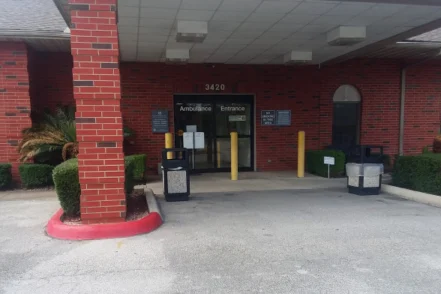 Texas
TexasBeaumont VA Clinic
3420 Plaza Circle, Beaumont, TX 77707
Treatment Programs
- Alcohol Rehab
- Dual Diagnosis
- Opioid Addiction
- +7
-
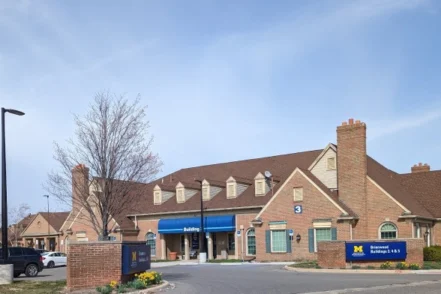 Michigan
Michigan Medicine Briarwood Med Rehab
355 Briarwood Circle, Building 4 Ann Arbor, Michigan 48108
Treatment Programs
- Dual Diagnosis
- Young Adult Rehab
- Adult Program
- +4