
The Mental Health Care Provider Shortage in the Spotlight
Published May 6, 2026

The United States is facing a growing gap between the need for mental health treatment and the availability of mental health treatment facilities. New data from multiple states shows the gap is widening fast, even as federal policy threatens to pull the financial safety net further out of reach.
Nearly half of Americans have mental health challenges and roughly 80% of those with substance use disorders don’t get treatment. Conditions driving those numbers are getting worse.
States at the Breaking Point on Behavioral Health Access
The crisis is playing out state by state. Nevada ranked last in youth and overall mental health metrics in 2025 and 49th in adult mental health, according to an annual report by Mental Health America. Specific problem areas included the share of youth experiencing major depressive episodes, the rate of adults with substance use disorder, and youth receiving no preventative care.
In Nevada, the ratio of mental health professionals for the residents is 1:460. All counties in The Silver State have shortages of trained professionals, and the lack of outpatient services has forced many families to seek inpatient institutionalization for their children.
New Jersey tells a parallel story. The Garden State has just over half the psychiatrists it needs and faces “catastrophic” workforce shortages in psychiatric hospitals and community providers, according to Inseparable’s report. More than 1.3 million New Jerseyans have diagnosed mental health conditions, made worse by the shortage of available hospital beds and services.
Among New Jersey residents with mental health conditions, less than half with Medicaid saw a behavioral health specialist, and just 29% of those with commercial insurance did.
Linking Mental Health and Addictions
For people dealing with co-occurring disorders alongside substance use disorders, these workforce gaps are especially devastating. Dual diagnosis treatment requires coordinated, integrated care from psychiatrists, therapists and addiction counselors working in tandem. When any one piece of that team is missing, the whole system breaks down.
From 2019 to 2023, the number of Americans living in areas designated as Mental Health Professional Shortage Areas climbed from roughly 118 million to 169 million, while mental health claims rose 83% during the same period. The rate of staff leaving the behavioral health field now exceeds those entering it, creating a pipeline problem that won’t be solved quickly.
Federal Medicaid Cuts Threaten to Worsen the Crisis
Just as states like Nevada, New Jersey, and Ohio are attempting to address behavioral health workforce shortages, new federal policy adds pressure from the opposite direction. President Trump signed a spending package that imposed steep reductions to the social safety net, including Medicaid, that will go into effect in 2027.
Under the new federal law, the standards for obtaining Medicaid will become more stringent even as people’s financial situations haven’t improved, thereby reducing the number of people who can access mental health treatment if they don’t have insurance. In Nevada, children’s advocates warn families will have to spend considerably more time navigating paperwork and reapplying for Medicaid more frequently.
In New Jersey, the Medicaid impact is equally alarming. Medicaid is essential to cover behavioral health programs, and advocates warn that cuts will worsen the situation.
Medicaid budgets might be reduced by up to $665 billion over the 2025–2034 period, with Medicaid expansion states like Nevada facing reductions of more than 15% of their Medicaid budgets.
Treatment Approaches That Work
Despite the challenges, residential treatment centers and outpatient behavioral health programs continue to offer effective options, particularly those using evidence-based therapies designed for co-occurring disorders. For instance, clinicians and facilities have adapted staffing roles to mitigate shortages.
Despite the shortages, treatment remains consistent. Evidence-based modalities used in dual diagnosis programs include holistic and behavioral therapy and medication-assisted treatment. Nevada’s 2025 legislation created a new licensed behavioral health and wellness practitioner credential to help expand the workforce for children’s mental health services.
New Jersey has implemented loan repayment programs for mental health professionals and joined several interstate licensure compacts to help streamline hiring across state lines. However, advocates say these measures alone are insufficient given the scope of the shortage.
If you or a family member has a mental health condition, substance use disorder or both, comprehensive care is available. Call 800-908-4823 (Sponsored) to find mental health treatment facilities and dual diagnosis treatment programs. Our treatment centers directory connects individuals and families with residential and outpatient behavioral health programs with flexible payment options.
Author

Courtney Myers, MS
Read Bio
Courtney Myers has more than 15 years of experience in online writing and editing. Since graduating from N.C. State University with an MS in Technical Communication, she’s helped clients improve their visibility and reach through expert-level content creation. She specializes in addiction recovery and behavioral healthcare topics.
Editor

Peter Lee, PhD
Read Bio
Peter W.Y. Lee is a writer and historian of American history during the Cold War. His primary focus is the relationship between youth and popular culture and its impact on U.S. society during the twentieth century. He has published widely on how the public has used popular culture as a mechanism to address political and social shifts throughout time
Articles About Alcohol & Treatment

Rural Maine Raffle Backs Mental Health Treatment Facilities
Rural Maine Raffle Backs Mental Health Treatment Facilities Published October 22, 2026 The proceeds from a raffle in Maine went to mental health facilities in Aroostook County to assist rural residents who don’t have resources. The 5th Annual Fall Spectacular was sponsored by the Center for Advancement of Rural Living in Caribou and directed every…

Ohio Drug Court Graduates Credit Dual Diagnosis Treatment
Ohio Drug Court Graduates Credit Dual Diagnosis Treatment Published October 21, 2026 Three men graduated from Fulton County Drug Court this month with more than a certificate. Scott Ward, Michael Burch and Mathias Petersen left the program employed and two had more than two years of sobriety under their belts. Each story also reflected the…

Substance Abuse Treatment Expands Across Eight Alabama Prisons
Substance Abuse Treatment Expands Across Eight Alabama Prisons Published October 20, 2026 Out in Alabama, Governor Kay Ivey has awarded $280,806 to the Alabama Department of Corrections to fund the Residential Substance Abuse Treatment program in eight state jails for 12 months. These facilities include Julia Tutwiler Prison for Women and William E. Donaldson Correctional…
Browse Treatment Centers by State
-
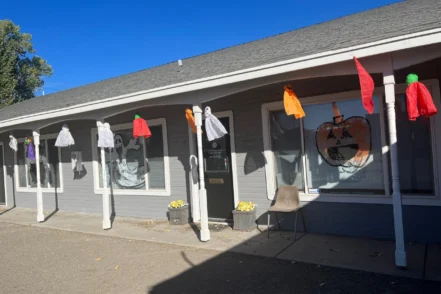 Nevada
Rural Nevada Counseling
720 South Main Street, C, Yerington, NV 89447
Treatment Programs
- Alcohol Rehab
- Dual Diagnosis
- Opioid Addiction
- +13
-
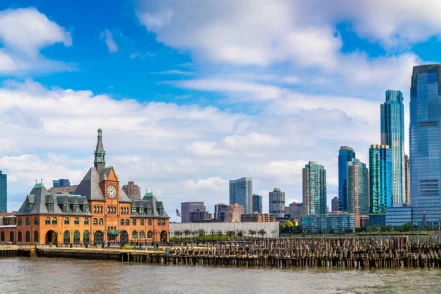 New Jersey
Serenity at Summit New Jersey
1000 Galloping Hill Road, Union, NJ 07083
Treatment Programs
- Alcohol Rehab
- Dual Diagnosis
- Opioid Addiction
- +4
-
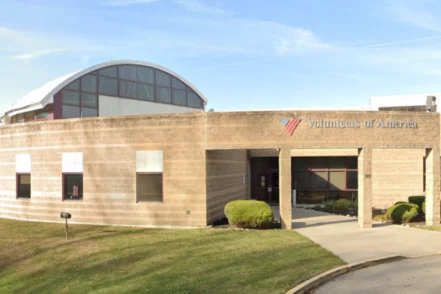 Ohio
OhioVolunteers of America Dayton Residential Reentry Program
1931 South Gettysburg Avenue, Dayton, OH 45417
Treatment Programs
- Alcohol Rehab
- Opioid Addiction
- Drug Rehab
- +8
-
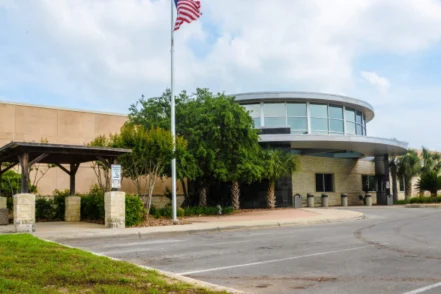 Texas
TexasNorth Central Federal VA Clinic
17440 Henderson Pass, San Antonio, TX 78232
Treatment Programs
- Dual Diagnosis
- Adult Program
- Senior Rehab
- +5