
Bills Aim to Expand Addiction and Mental Health Care in D.C.
Two new bills may significantly increase access to addiction and mental health care in D.C. And behavioral health experts are optimistic that the new legislation could bridge critical care gaps across the District of Columbia.
Rethinking Public Policy
In a recent hearing, the D.C. Council’s Committee on Health received public input on three new Bills, two of which propose to amend existing social programs to better help D.C.’s unhoused community.
The first of these Bills (the Behavioral Health Housing Voucher Transparency Amendment Bill), if enacted, would direct D.C.’s Department of Behavioral Health (DBH) to create an online portal through which individuals can access the DBH’s behavioral health housing voucher program.
This portal would include a visible waiting list and would promote better monitoring and transparency, as well as more efficiency in the system.
The second Bill (the Place Based Substance Use Disorder Outreach Amendment Bill) would provide permanent funding for an existing outreach program. This outreach program provides resources and services near overdose hotspots in D.C., and has already shown great promise in bringing down overdose deaths over the short time it’s been running.
Addiction, Mental Health Care for D.C.’s Homeless
According to Brianne Nadeau, a ward councillor for one of the areas where the outreach program operates, nonfatal overdoses have already been cut in half within a year.
She testified that consistent interaction at the outreach sites leads to deeper trusting relationships forming between volunteers and the community, which, in turn, leads to more individuals getting treatment and rebuilding healthier lives.
This program could be critical in reducing homeless deaths, 57% of which were the result of opioid overdoses in 2023, according to the office of the Chief Medical Examiner (OCME).
Although those testifying agreed that targeted outreach is critical in saving lives, there was conflict around how to measure success and the quality of services. Residents were also able to voice concerns over outreach teams not going to certain hotspots or not providing resources when they were at others.
While taking these concerns into account, DBH ultimately supported the Bill, but left it subject to available public funds rather than making it a mandatory part of the D.C. budget.
Making It Easier to Access Housing
The Voucher Transparency Amendment Bill is part of a larger effort to address a growing problem. Currently, the DBH does not consider supportive housing to be one of its core services, but it can’t release clients from its psychiatric facility if they don’t have anywhere to go.
DBH can also only support 720 households in its program, and can only make about 20 new housing vouchers available each year.
The proposed online portal remedies one of the biggest contributors to the current program’s struggles, which is the fact that there hasn’t been a working waiting list or application program since 2024.
By updating their current system, D.C. leaders aim to reintroduce these features in a more streamlined way, while also possibly integrating the DBH’s housing capacity with that of the District of Columbia Housing Authority (DCHA). This step would greatly increase the availability of housing support to those using DBH services.
Find Treatment Options Near You
If you or someone you love needs addiction or mental health treatment, there is help available. Across Washington D.C. and nationwide there are low and specialized treatment centers offering behavioral health, substance use, and dual diagnosis care.
Explore treatment centers in your area or call 800-908-4823 (Sponsored) for confidential support.
Author

Emile Oosthuizen
Read Bio
Emile is a law student in South Africa with a long history of outreach work in and around the country. He holds an undergraduate degree in Commercial Law and Economics. Having seen the problems the legal system in an unequal society can perpetuate, he intends to use his legal career to help people who face complex and difficult legal problems. When he’s not working, he’s either running, playing music, or fixing his (really old) car.
Editor

Terri Beth Miller, PhD
Read Bio
Terri Beth received her PhD in English literature from the University of Tennessee Knoxville and is an educator and disability studies scholar. For more than a decade, she has written extensively in the fields of mental health and addiction recovery and fiercely advocates for the destigmatization of mental illness.
Articles About Alcohol & Treatment

Federal Homelessness Policy Shifts From Housing to Treatment
Federal Homelessness Policy Shifts From Housing to Treatment Published September 1, 2026 Federal homelessness policy is being rebuilt around co-occurring disorders. In August 2026, the Department of Health and Human Services, the Office of National Drug Control Policy and the Department of Housing and Urban Development introduced a “Treatment First” model. This effort puts addiction…

Virginia Mobile Crisis Response Faces Medicaid Coverage Cut
Virginia Mobile Crisis Response Faces Medicaid Coverage Cut Published September 1, 2026 Virginia’s mobile crisis response coverage for Medicaid members is set to shrink and a companion service that catches people after a crisis might lose funding entirely. The Old Dominion has a robust line of services for anyone battling addictions. But those most vulnerable…

Poor Mental Health Linked to Higher Drug Use Disorder Odds
Poor Mental Health Linked to Higher Drug Use Disorder Odds Published August 31, 2026 Anyone who’s looked for behavioral health care while managing a substance problem and a mental health condition knows the system tends to treat them as separate diagnoses. New survey research on co-occurring disorders adds to the case that they’re one problem…
Browse Treatment Centers by State
Top National Treatment Centers
-
 California
10 Acre Ranch
5953 Grand Avenue Riverside, California 92504
Treatment Programs
- Alcohol Rehab
- Dual Diagnosis
- Opioid Addiction
- +4
-
 Wisconsin
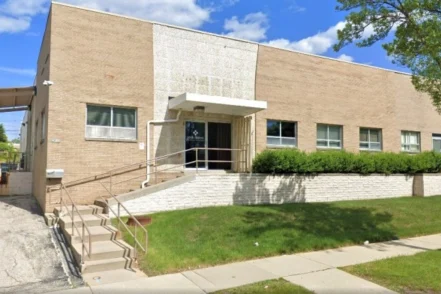
10th Street Comprehensive Treatment Center
4800 South 10th Street Milwaukee, Wisconsin 53221
Treatment Programs
- Alcohol Rehab
- Opioid Addiction
- Drug Rehab
- +4
-
 Oklahoma
GRAND Addiction Recovery Center
6333 East Skelly Drive, Tulsa, OK 74135
Treatment Programs
- Alcohol Rehab
- Dual Diagnosis
- Opioid Addiction
- +4
-
 Texas
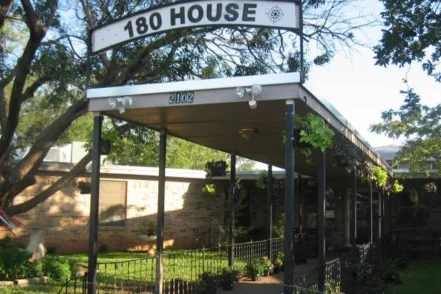
Texas180 House
2102 Amy Lyn Avenue Abilene, Texas 79603
Treatment Programs
- Alcohol Rehab
- Opioid Addiction
- Drug Rehab
- +4