
Culturally Grounded Program Cuts Substance Use and Anxiety in Native American Patients
Published August 14, 2026

A virtual prevention program reduced both substance use and anxiety symptoms among urban American Indian and Alaska Native young adults, according to a randomized clinical trial. Movement on both fronts makes the finding relevant to anyone thinking about co-occurring disorders, where drug use and mental health conditions must be treated as one problem rather than two.
The Trial Details
Researchers evaluated a program called Traditions and Connections for Urban Native Americans, or TACUNA, developed to prevent opioid, alcohol and cannabis use among American Indian and Alaska Native emerging adults ages 18 to 25 living in urban areas.
The program combines evidence-based clinical techniques with traditional practices, delivered as a series of virtual workshops plus a wellness circle. Participants in the comparison group received a single virtual culturally informed opioid education workshop. Outcomes followed over a 12-month period.
The work was funded by the National Institutes of Health.
Mental Health and Substance Use Moved Together
Participants who received TACUNA reported greater reductions in cannabis and alcohol use than those in the comparison group. They also reported greater reductions in anxiety symptoms, and spent less time around peers using cannabis or heroin. Both groups maintained their sense of cultural connection across the following year.
That combination is crucial. Anxiety and substance use frequently travel together, and programs that treat one while ignoring the other tend to leave the untreated condition driving relapse. Here, both improved in the same participants under the same program.
Co-occurring disorders also refer to dual diagnosis, meaning that a substance use disorder and a mental health condition present at the same time in the same person. Anxiety disorders, depression,and bipolar disorder tend to pair with substance use. The relationship runs in both directions: a person may use substances to manage anxiety symptoms, and heavy use can worsen or generate anxiety on its own.
Integrated treatment addresses both conditions together, with one clinical team and one plan. Sequential treatment, where a person completes addiction treatment and only then gets a mental health referral, links to worse retention and higher relapse rates.
This’s why asking a program directly how it handles a second diagnosis is a key question during intake. You can also inquire if one team handles both diagnoses, if the staff has a psychiatric prescriber, and how providers integrate mental health work into the treatment plan.
Virtual Delivery Matters
Organizers originally designed TACUNA for in-person sessions and moved it to a virtual format when the pandemic began in 2020. The team saw that “these remote sessions had such prominent effects, which is ultimately good news for accessibility.”
Access remains a real constraint for this population. As with many minority groups that lack access, roughly seven in ten American Indian and Alaska Native people live in urban areas, often far from tribal health services, and culturally grounded behavioral health programming is scarce for urban Native young adults.
As such, American Indian and Alaska Native individuals face higher risk of drug overdose death and report higher rates of cannabis use and psychological distress than other groups. They depend on community and cultural strengths that prevention work can build on.
Treatment Approaches for Mental Health and Addiction
TACUNA drew on motivational interviewing, a counseling method that helps a person resolve their own ambivalence about change rather than being argued into it, along with social network mapping and traditional practices.
Treatment facilities working with co-occurring disorders typically use a broader set of tools. Cognitive group therapy targets the thought and emotion patterns feeding both anxiety and substance use. Medication management may include an antidepressant or anti-anxiety medication alongside medication for opioid or alcohol use disorder, and the two can be prescribed together by a team that treats both.
Comprehensive Treatment for Everyone
Care for co-occurring disorders is delivered across several levels. Residential treatment centers provide 24-hour support when symptoms are severe or the home environment isn’t workable. Other outpatient programs offer structure while a person keeps living at home. Folks can also enroll in step-down after a higher level of care.
Our online directory lists treatment centers directory-wide with mental health, behavioral health and dual diagnosis programs. That way, families can compare facilities that treat depression and addiction or anxiety and addiction in the same setting rather than piecing care together across providers.
Our helpline at 800-908-4823 (Sponsored) is free, confidential and staffed around the clock to assist with guidance regarding co-occurring disorders. Call or text 988 to reach the Suicide and Crisis Lifeline.
Author

Quentin Blount
Read Bio
Quentin brings nearly a decade of experience as a writer, editor, and digital publisher to his role as Content Manager for Rehab.com. He aims to help people better understand their treatment options by creating engaging and informative content that is user-friendly, factually accurate, and optimized for search engine visibility. In his free time, Quentin enjoys the company of his friends, family, and his dog, Coop.
Editor

Peter Lee, PhD
Read Bio
Peter W.Y. Lee is a writer and historian of American history during the Cold War. His primary focus is the relationship between youth and popular culture and its impact on U.S. society during the twentieth century. He has published widely on how the public has used popular culture as a mechanism to address political and social shifts throughout time
Articles About Alcohol & Treatment
Culturally Grounded Program Cuts Substance Use and Anxiety in Native American Patients
Culturally Grounded Program Cuts Substance Use and Anxiety in Native American Patients Published August 14, 2026 A virtual prevention program reduced both substance use and anxiety symptoms among urban American Indian and Alaska Native young adults, according to a randomized clinical trial. Movement on both fronts makes the finding relevant to anyone thinking about co-occurring…

Oklahoma City Crisis Center Will Offer Detox and Psychiatric Care
Oklahoma City Crisis Center Will Offer Detox and Psychiatric Care Published August 13, 2026 The clinically significant detail in the Oklahoma City crisis center that broke ground on August 10 is the programs it houses rather than how many beds it holds. Plans list stabilization detoxification as a function inside the facility, alongside psychiatric crisis…

Eli Lilly Adds Psychedelic Mental Health Treatments in $2.8B Deal
Eli Lilly Adds Psychedelic Mental Health Treatments in $2.8B Deal Published August 13, 2026 Large pharmaceutical companies are moving real money into psychedelic mental health treatment, and the biggest commitment yet was recorded this month. Eli Lilly is acquiring AtaiBeckley and its psychedelic pipeline for $2.8 billion upfront. This is the third recent big-pharma bet…
Browse Treatment Centers by State
-
 Colorado
About an Alternative Hands Up
3009 West Colorado Avenue, Suite B Colorado Springs, Colorado 80904
Treatment Programs
- Alcohol Rehab
- Opioid Addiction
- Drug Rehab
- +4
-
 Arkansas
Catar Clinic Hot Springs National Park
1 Mercy Lane, Suite 403 Hot Springs National Park, Arkansas 71913
Treatment Programs
- Alcohol Rehab
- Dual Diagnosis
- Opioid Addiction
- +5
-
 Montana
Crow Nation Recovery Center
101 Butechetch Avenue Crow Agency, Montana 59022
Treatment Programs
- Alcohol Rehab
- Dual Diagnosis
- Opioid Addiction
- +5
-
 Missouri
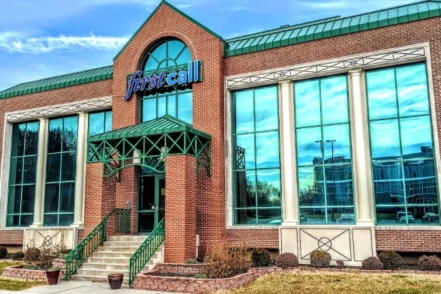
First Call Kansas City
9091 State Line Road Kansas City, Missouri 64114
Treatment Programs
- Alcohol Rehab
- Drug Rehab
- Adult Program
- +3