
Shared Genes Found in Anxiety and Alcohol Use Disorders
Published August 5, 2026
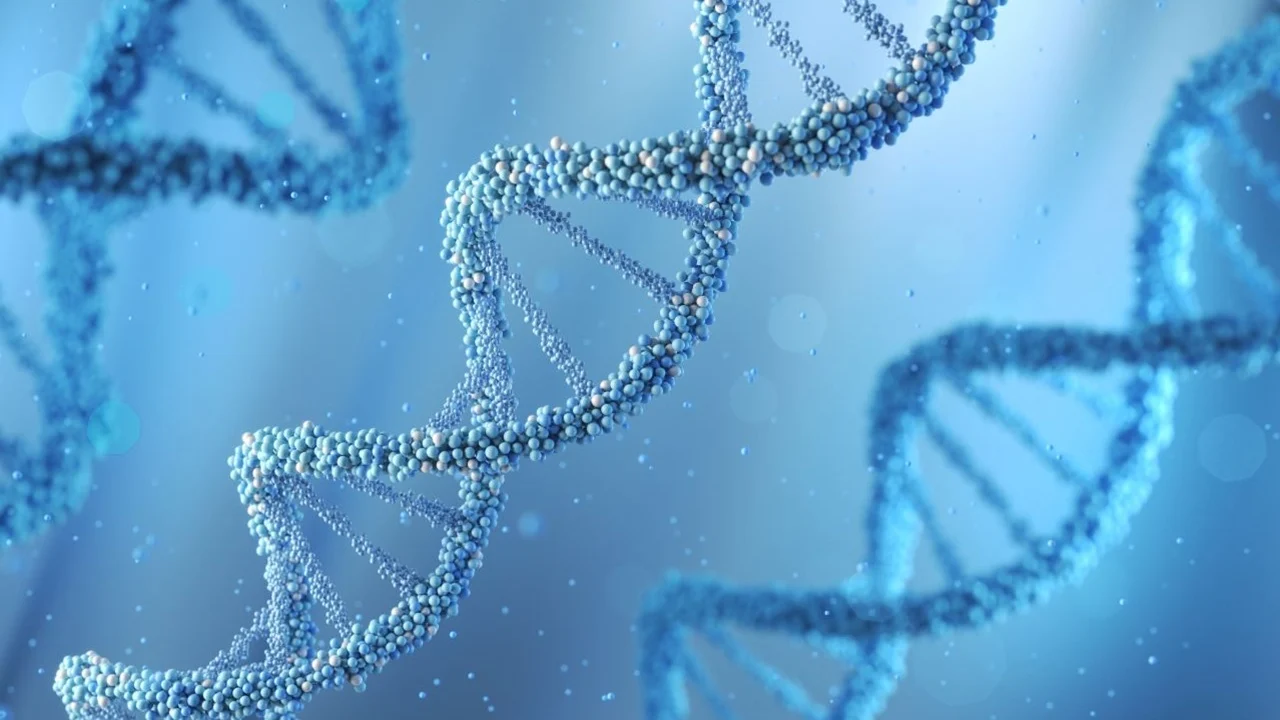
People seeking help for anxiety and drinking often go to two different systems, a mental health provider for one and an addiction program for the other. A new genomic study makes a strong biological argument for why that split doesn’t serve them and strengthens the case for dual diagnosis treatment that addresses both conditions at once.
The study found that anxiety disorders and problematic alcohol use share a substantial portion of their genes and converge on the same brain regions.
Mental Health Links to Addiction
The clinical overlap has been documented for years. Between 20-40% of folks with anxiety disorders are also diagnosed with alcohol use disorder. Folks with anxiety and depression experience more alcohol use disorder symptoms than others who drink at the same level.
Researchers led by Mingjian Shi, with Joshua C. Gray of the Uniformed Services University, set out to determine whether that overlap reflects shared biology rather than coincidence. Indeed, prior studies have shown correlations between alcohol intake and other mental health conditions.
For this case, they analyzed summary statistics from large genome-wide association studies of problematic alcohol use and anxiety disorders among hundreds of thousands of participants.
The answer was yes, with a considerable degree of sharing. The two traits showed a moderate genetic correlation, and 52.5% of shared causal variants, roughly 4,700 of them. Among those shared variants, 86.4% pointed in the same direction, meaning the same genetic variation tended to raise risk for both conditions rather than trading one off against the other.
Specific Genes and Brain Regions
A more granular analysis identified 97 individual genetic locations jointly associated with both conditions. Most of them hadn’t reached significance in either condition’s own genome-wide study, which a cross-trait method surfaces.
Those locations mapped to 97 genes. Two stood out. DRD2 encodes the dopamine D2 receptor, central to reward processing. PDE4B regulates cyclic AMP signaling and has been implicated in neuroinflammation and psychiatric conditions.
Gene expression linked to the shared variants concentrated in brain tissue and enriched in specific regions: the prefrontal cortex, anterior cingulate cortex, hippocampus, hypothalamus, substantia nigra and amygdala. These circuits govern cognitive control, stress regulation and reward. Cell-type analysis pointed to neurons in the cerebral cortex, hippocampus, midbrain and thalamus, along with oligodendrocytes, the cells that produce myelin.
As a control, the researchers ran the same analysis against height and found minimal overlap, which supports that the alcohol and anxiety result isn’t an artifact of the method.
Direction Matters
The researchers also used Mendelian randomization to test whether either condition appears to drive the other. Results indicated bidirectional associations, meaning anxiety raised risk for problematic alcohol use and vice versa.
Given the gap in mental health providers in the country, knowing the link between anxiety and alcohol use can give medical professionals insight into how to holistically address multiple conditions at once.
The authors are careful here. They write that for highly polygenic and genetically correlated traits like these, part of the apparent bidirectional signal may reflect widespread shared pleiotropy. The findings are best read as supportive of potential reciprocal effects rather than definitive evidence of causality.
They also note that some shared signals may reflect broader internalizing liability rather than anxiety specifically. In addition, the analysis was dominated by participants of European ancestry, which limits how far the results generalize.
Dual Diagnosis & Treatment
Dual diagnosis, also called co-occurring disorders, describes the presence of a substance use disorder alongside a mental health condition. Integrated treatment addresses both in the same program with a coordinated team, rather than sequencing them or splitting them across providers.
Integration matters. When anxiety and drinking feed each other, treating one while leaving the other untouched leaves the mechanism running. Alcohol produces short-term anxiety relief through its effect on GABA receptors, and alcohol withdrawal raises anxiety, which the biology described here helps explain.
Both residential and outpatient behavioral treatment centers offer integrated care, and the right intensity depends on symptom severity, physical dependence and how much support exists at home. Evidence-based therapies used across both conditions include group behavior therapy, and trauma-focused approaches when trauma is part of the picture.
Medication management is often part of dual diagnosis treatment. Three medications are FDA approved for alcohol use disorder, and several classes are used for anxiety. The authors flagged a handful of the shared genes as targets of existing approved drugs and suggested repurposing possibilities worth further study. They noted that a gene-drug interaction does not mean a given compound would be therapeutic.
Comprehensive Care for All
When comparing programs, ask directly whether a facility treats anxiety and substance use in the same treatment plan, how a personalized team coordinates that plan, and whether a psychiatric prescriber is on staff. A program that refers mental health care out isn’t delivering integrated care.
Our online directory lists mental health treatment facilities, behavioral treatment centers, and dual diagnosis programs by location, with details on levels of care and insurance accepted.
For free and confidential help at any hour, dial 800-908-4823 (Sponsored) . Calling 988 reaches the Suicide and Crisis Lifeline.
Author

Nikki Wisher, BA
Read Bio
Nikki Wisher is an Atlanta-based content writer who specializes in health and wellness. After earning her BA in English, she has been writing in the health and wellness space for over a decade, with credits ranging from addiction recovery to fitness to aesthetics and skin care. This includes her inclusive running blog forallrunners.com.
Editor

Peter Lee, PhD
Read Bio
Peter W.Y. Lee is a writer and historian of American history during the Cold War. His primary focus is the relationship between youth and popular culture and its impact on U.S. society during the twentieth century. He has published widely on how the public has used popular culture as a mechanism to address political and social shifts throughout time
Articles About Alcohol & Treatment

Springfield, Missouri Approves $500K Mental Health Treatment Resource Map
Springfield, Missouri Approves $500K Mental Health Treatment Resource Map Published October 2, 2026 The city of Springfield has allocated $500,000 to create a map of mental health treatment and substance use resources in the city. To be clear, the state of Missouri has plenty of options for folks dealing with additions, but local recovery advocates…

Stone County, Mississippi Program Now Serves Women Only
Stone County, Mississippi Program Now Serves Women Only Published October 2, 2026 A church out in Mississippi changed its recovery program recently just for women. The Church of Turning Points in Stone County split its Life Recovery Program to create a women-only meeting. The group gathers each Thursday evening at 6:30 at the Sunflower Community…

UC San Diego Awarded $12.6 Million for Dual Diagnosis Research
UC San Diego Awarded $12.6 Million for Dual Diagnosis Research Published October 1, 2026 A new $12.6 million federal investment in addiction science could change how we use dual diagnosis treatment. Researchers at UC San Diego in California received the five-year award from the National Institute on Drug Abuse to launch the Polysubstance Addiction Research…
Browse Treatment Centers by State
-
 California
Discovery Mood and Anxiety Program
214 West Bluff Avenue Fresno, California 93711
Treatment Programs
- Dual Diagnosis
- Young Adult Rehab
- +-1
-
 North Carolina
Mood Treatment Center Country Club
104 Cambridge Plaza Drive, Winston-Salem, NC 27104
Treatment Programs
- Dual Diagnosis
- Alcohol Rehab
- Opioid Addiction
- +1
-
 Illinois
Winfield Moody Health Center Near North Health Service
1276 North Clybourn Street Chicago, Illinois 60610
Treatment Programs
- Alcohol Rehab
- Dual Diagnosis
- Adult Program
- +3
-
 Georgia
Bradford Health Services Augusta
105 Rossmore Place, Augusta, GA 30909
Treatment Programs
- Alcohol Rehab
- Dual Diagnosis
- Opioid Addiction
- +5