
Workplace Drug Policies, ADA Rules Collide on Marijuana Rescheduling
Published July 10, 2026

Workplace drug policies could soon collide with ADA rules, and the trigger is the changing legal status of marijuana. Legal experts have outlined the shift and the conflict it’s creating for employers between enforcing a drug policy and honoring a separate, legally distinct duty: ADA accommodation.
On December 18, 2025, President Trump directed the attorney general to reschedule marijuana from a Schedule I to a Schedule III drug under the Controlled Substances Act. The change is expected to take effect sometime in 2026.
Forty states and Washington, D.C. currently allow medical marijuana use, and 24 states plus D.C. allow recreational use, even though the drug remains illegal at the federal level. In fact, some studies show that self-medication through cannabis rarely works. Nevertheless, Schedule III status would formally recognize marijuana as having an accepted medical use, a distinction that carries direct weight under disability law.
Workplace Drug Policies and ADA Rules Collide
That recognition is where the conflict starts. If marijuana gains Schedule III status, some employees may have a stronger legal basis for requesting workplace accommodation under the Americans with Disabilities Act, particularly those using it under a doctor’s care for a qualifying condition.
But most employers still enforce zero-tolerance workplace drug policies built around marijuana’s old Schedule I status, and the two sets of rules no longer clearly align. That conflict compounds existing challenges with opioids, fentanyl and ketamine in the workforce and the evolving tools like AI used to enforce drug testing in the workforce.
The employees caught in the middle of that conflict are often the ones managing more than one condition at once. A worker with a documented disability who also navigates substance use, whether that involves marijuana, opioids or another substance, sits directly in the gap between a drug policy and an accommodation duty that haven’t caught up with each other.
Mental Health Links to Addiction
That gap is a mental health issue as much as a legal one. Substance use disorders frequently co-occur with depression, anxiety and trauma. Opioid use disorders in particular are rarely separate from underlying mental health conditions.
Indeed, as the shortage of mental health providers grows, many people turn to self-medication or reliance on drugs. Ketamine, one of the substances employers report growing challenges with, is itself used in supervised clinical settings to treat treatment-resistant depression, and new studies now feature psychedelics in testing stages. The expanded use of medications underscores how closely substance use and mental health are intertwined even in a workplace policy conflict.
In a broader context, dual diagnosis is the presence of a substance use disorder alongside a mental health condition. Others have co-occurring mental health conditions and disabilities. Treating both at the same time, rather than addressing one and overlooking the other, is the more effective approach. It’s especially relevant for employees whose disability status and substance use make up part of the picture.
Finding Care in a Changing Legal Landscape
For individuals and families sorting these overlapping issues, whether in the workplace or not, the practical next step is finding a program built to treat the whole person.
Clinicians generally employ evidence-based therapies such as behavior counseling, paired with medications when appropriate for patients. These are typically core components of integrated dual diagnosis treatment.
Treatment Available Now
That’s where we come in. Our browsable directory lists behavioral treatment centers and dual diagnosis programs to help you find comprehensive care anywhere in the USA.
Or, simply call 800-908-4823 (Sponsored) to speak with an expert about comprehensive mental health and addiction treatment.
Author

Terri Beth Miller, PhD
Read Bio
Terri Beth received her PhD in English literature from the University of Tennessee Knoxville and is an educator and disability studies scholar. For more than a decade, she has written extensively in the fields of mental health and addiction recovery and fiercely advocates for the destigmatization of mental illness.
Editor

Peter Lee, PhD
Read Bio
Peter W.Y. Lee is a writer and historian of American history during the Cold War. His primary focus is the relationship between youth and popular culture and its impact on U.S. society during the twentieth century. He has published widely on how the public has used popular culture as a mechanism to address political and social shifts throughout time
Articles About Alcohol & Treatment
Workplace Drug Policies, ADA Rules Collide on Marijuana Rescheduling
Workplace Drug Policies, ADA Rules Collide on Marijuana Rescheduling Published July 10, 2026 Workplace drug policies could soon collide with ADA rules, and the trigger is the changing legal status of marijuana. Legal experts have outlined the shift and the conflict it’s creating for employers between enforcing a drug policy and honoring a separate, legally…
Deep TMS Offers a Lesser-Known Path in Addiction Recovery
Deep TMS Offers a Lesser-Known Path in Addiction Recovery Published July 10, 2026 A brain-stimulation therapy that many Americans have never heard of draws new attention for its potential to treat addiction and mood disorders together. Deep transcranial magnetic stimulation, or Deep TMS, is the only device of its kind cleared for an addiction indication…

Blue Space Therapy Supports Dual Diagnosis Recovery
Blue Space Therapy Supports Dual Diagnosis Recovery Published July 9, 2026 For people in dual diagnosis treatment, healing often happens as much outside the therapy room as inside it. A growing number of programs are turning to what researchers call blue space therapy. This involves structured time near the sea, rivers, or lakes to help…
Browse Treatment Centers by State
-
 Pennsylvania
Abraxas WorkBridge
2840 Liberty Ave, Suite 300 Pittsburgh, Pennsylvania 15222
Treatment Programs
- Alcohol Rehab
- Dual Diagnosis
- Opioid Addiction
- +3
-
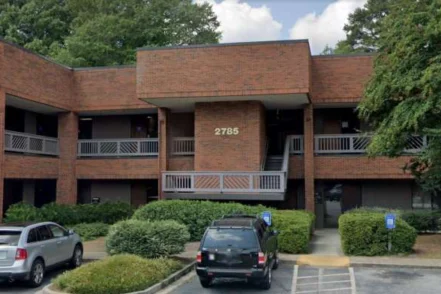 Georgia
Caring Works Hope House
2785 Lawrenceville Highway, Suite 3 Decatur, Georgia 30030
Treatment Programs
- Alcohol Rehab
- Dual Diagnosis
- Opioid Addiction
- +5
-
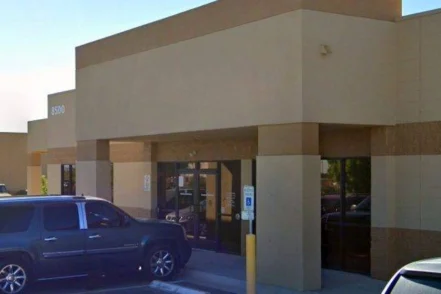 Texas
TexasEmergence Health Network Boeing Drive
8500 Boeing Drive El Paso, Texas 79925
Treatment Programs
- Dual Diagnosis
- Young Adult Rehab
- Men's Rehab
- +1
-
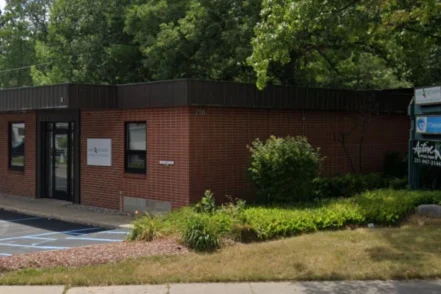 Michigan
Hope Network Traverse City
216 Munson Ave, Suite A Traverse City, Michigan 49686
Treatment Programs
- Alcohol Rehab
- Dual Diagnosis
- Opioid Addiction
- +4