
Borderline Personality Disorder and Alcohol Use Disorders Strongly Linked
Published April 24, 2026

A recent meta-analysis has found that alcohol use disorders affect more than half of people diagnosed with borderline personality disorder (BPD). The study delivers fresh urgency to the case for dual diagnosis treatment that addresses both psychiatric illness and harmful drinking at the same time.
The findings confirm what many behavioral health clinicians have long suspected. For people living with BPD, alcohol misuse isn’t a side issue; it’s a defining clinical risk that shapes treatment outcomes across the board.
The Link to Substance Use
The researchers reviewed 15 studies covering more than 15,600 adults with borderline personality disorder. They pooled the data to produce prevalence estimates that put the scale of the problem in stark relief.
Overall, the prevalence of alcohol use disorders among people with BPD reached 55.28%. By comparison, general population estimates for alcohol use disorders are roughly 8.6% among men when compared to 1.7% among women. These figures highlight just how dramatically elevated the risk is for people with this diagnosis.
The researchers also noted that alcohol misuse can worsen symptom severity, increase self-harm risk, and complicate treatment engagement, reinforcing why integrated screening and care are so critical.
Borderline Personality Disorder & the Dual Diagnoses
Borderline personality disorder is a complex mental health condition marked by emotional instability, intense interpersonal relationships, impulsivity and a deep fear of abandonment. These same traits create significant vulnerability to substance use as a coping mechanism.
This is the heart of why dual diagnosis treatment matters so much. When alcohol use and psychiatric conditions like BPD occur together, treating the symptoms of only one consistently produces worse outcomes. Participants may cycle through mental health treatment facilities without recovery taking hold because the underlying substance use goes unaddressed. Others might enter addiction treatment to manage alcohol withdrawal without the emotional regulation support needed to stay sober.
Co-occurring disorders require a coordinated and simultaneous approach that treats both conditions concurrently. For BPD and alcohol use disorder, that means combining evidence-based therapies with addiction counseling and any needed medication management.
Approaches for BPD & Alcohol Use Disorder
The behavioral health field has developed effective tools for this dual diagnosis population, though they’re still not universally available in all treatment settings.
Residential treatment centers that specialize in co-occurring disorders provide structured, intensive care that many people with BPD and alcohol use disorder need. Residential programs offer 24/7 supervision, remove patients from environments that trigger drinking and allow for psychiatric evaluation and medication management.
For those who don’t require residential-level care, partial hospitalization programs (PHP) and lower-level outpatient programs can deliver structured dual diagnosis care while allowing patients to maintain daily responsibilities.
The researchers specifically called for clinicians to routinely screen for alcohol use disorders when assessing folks with borderline personality disorders. They should also consider integrated psychological and addiction interventions as standard parts of care, not an afterthought.
Integrated Behavioral Health Care is Essential
The gap between where the research points and what most people actually receive remains significant. Many mental health treatment facilities aren’t equipped to treat addiction, and many addiction programs lack psychiatric expertise to manage BPD. People with co-occurring conditions frequently fall through the cracks of a fragmented system.
Behavioral treatment centers offer dual diagnosis programming with psychiatrists, licensed therapists, and addiction counselors working in coordination. When both conditions are treated together within a customized treatment plan, outcomes improve measurably with fewer hospitalizations, better medication adherence and more sustained recovery.
For families trying to navigate this, knowing what to look for matters. A facility that treats “mental health or addiction” isn’t the same as one that treats both simultaneously. Ask directly if they treat co-occurring disorders and how their addiction and psychiatry teams communicate and coordinate.
Dual Diagnosis Care for BPD & Alcohol Use Disorder
If you or someone you love has borderline personality disorder and is battling alcohol use, integrated care is available. Dual diagnosis treatment programs and behavioral health facilities that specialize in co-occurring disorders can provide the template for a lasting recovery.
Call 800-908-4823 (Sponsored) or look through our directory to find dual diagnosis treatment centers and mental health treatment facilities. Entries are organized by location so you’ll never have to go far no matter your area.
Author

Eric Owens
Read Bio
Eric Owens has been a writer and editor for various businesses as well as his own successful websites. He has extensive experience creating content in the health and wellness space and the sustainability space. He holds a bachelor degree in Philosophy which helped him with presenting complex information in a simple way that all audiences can understand.
Editor

Peter Lee, PhD
Read Bio
Peter W.Y. Lee is a writer and historian of American history during the Cold War. His primary focus is the relationship between youth and popular culture and its impact on U.S. society during the twentieth century. He has published widely on how the public has used popular culture as a mechanism to address political and social shifts throughout time
Articles About Alcohol & Treatment

Springfield, Missouri Approves $500K Mental Health Treatment Resource Map
Springfield, Missouri Approves $500K Mental Health Treatment Resource Map Published October 2, 2026 The city of Springfield has allocated $500,000 to create a map of mental health treatment and substance use resources in the city. To be clear, the state of Missouri has plenty of options for folks dealing with additions, but local recovery advocates…

Stone County, Mississippi Program Now Serves Women Only
Stone County, Mississippi Program Now Serves Women Only Published October 2, 2026 A church out in Mississippi changed its recovery program recently just for women. The Church of Turning Points in Stone County split its Life Recovery Program to create a women-only meeting. The group gathers each Thursday evening at 6:30 at the Sunflower Community…

UC San Diego Awarded $12.6 Million for Dual Diagnosis Research
UC San Diego Awarded $12.6 Million for Dual Diagnosis Research Published October 1, 2026 A new $12.6 million federal investment in addiction science could change how we use dual diagnosis treatment. Researchers at UC San Diego in California received the five-year award from the National Institute on Drug Abuse to launch the Polysubstance Addiction Research…
Browse Treatment Centers by State
-
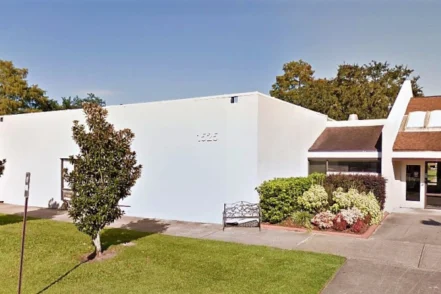 Louisiana
River Oaks Hospital
1525 River Oaks Road West, Harahan, LA 70123
Treatment Programs
- Alcohol Rehab
- Dual Diagnosis
- Opioid Addiction
- +5
-
 Ohio
OhioCatalyst Life Services The Center
741 Scholl Road Mansfield, Ohio 44907
Treatment Programs
- Young Adult Rehab
- Adult Program
- Alcohol Rehab
- +4
-
 Ohio
OhioAssociates For Family and Individual Counseling
14055 Cedar Road Cleveland, Ohio 44118
Treatment Programs
- Alcohol Rehab
- Dual Diagnosis
- Opioid Addiction
- +4
-
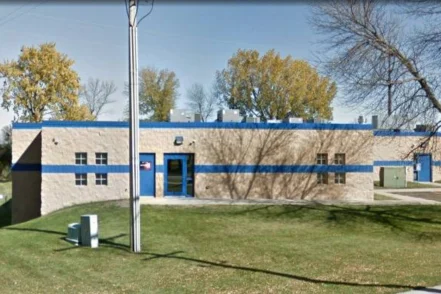 Minnesota
South Central Human Relations Center Dual Recovery Program
610 Florence Avenue Owatonna, Minnesota 55060
Treatment Programs
- Alcohol Rehab
- Dual Diagnosis
- Opioid Addiction
- +4