

Bronx, NY Drug & Alcohol Treatment Centers

14 results nearby

Looking for help with addiction in Bronx, NY?

NameAddressTreatment ProgramsInsuranceMedia

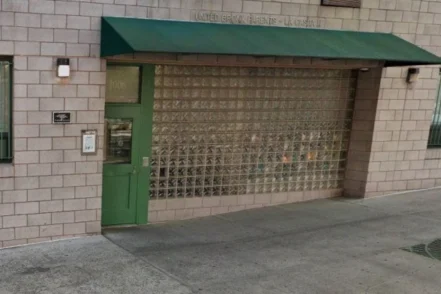
Acacia Network UBP La Casita III

1006 East 151st Street
Brooklyn, New York 11224

Treatment Programs

  • Alcohol Rehab
  • Dual Diagnosis
  • +3

Insurance

  • Medicaid
  • Private insurance
  • +5

Montefiore Mount Vernon Hospital Methadone Maintenance

3South 6Th Avenue
Mount Vernon, New York 10550

Treatment Programs

  • Alcohol Rehab
  • Dual Diagnosis
  • +4

Insurance

  • Medicaid
  • Self-pay options
  • +4
Get Help Now
Confidential & Free
646-832-2655
Sponsored
  • Learn about treatment options
  • Find helpful resources
  • Available 24/7

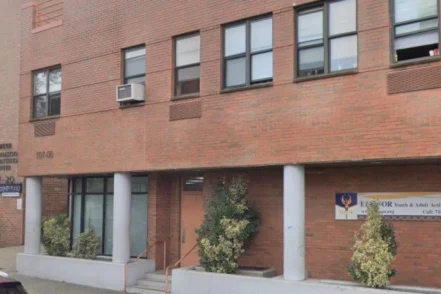
Elmcor Youth and Adult

107-06 Northern Boulevard
Corona, New York 11368

Treatment Programs

  • Alcohol Rehab
  • Dual Diagnosis
  • +4

Insurance

  • Medicaid
  • Self-pay options
  • +3

Catholic Charities Corona PROS

91-14 37th Avenue
Jackson Heights, New York 11372

Treatment Programs

  • Dual Diagnosis
  • Adult Program
  • +1

Insurance

  • Medicaid
  • Private insurance
  • +3

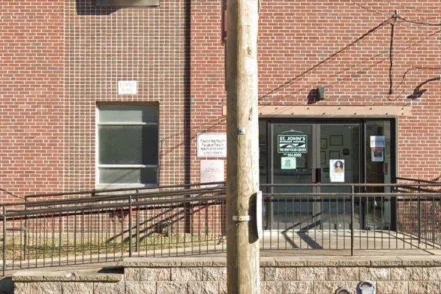
St Johns Riverside Hospital Opioid Treatment Program

2 Park Avenue
Yonkers, New York 10703

Treatment Programs

  • Young Adult Rehab
  • Adult Program
  • +1

Saint Johns Riverside Hospital Behavioral Health

2 Park Avenue
Yonkers, New York 10703

Treatment Programs

  • Alcohol Rehab
  • Dual Diagnosis
  • +4

Insurance

  • Medicaid
  • Self-pay options
  • +3

Phoenix House Long Island City

34-25 Vernon Boulevard
Long Island City, New York 11101

Treatment Programs

  • Alcohol Rehab
  • Dual Diagnosis
  • +4

Insurance

  • Private insurance
  • Self-pay options
  • +1

Phoenix House Long Island City Residential

3425 Vernon Boulevard
Long Island City, New York 11106

Treatment Programs

  • Mens Rehab
  • Womens Rehab
  • +1

Insurance

  • Private insurance

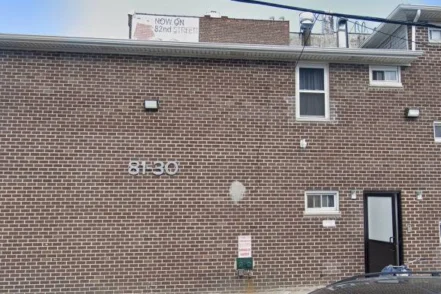
City Hospital Center Residence

8130 Baxter Avenue
Elmhurst, New York 11373

Treatment Programs

  • Alcohol Rehab
  • Dual Diagnosis
  • +4

Insurance

  • Medicaid
  • Private insurance
  • +2

Asian Community Alcoholism Counseling Asian American Mental Health

581 Bergen Boulevard, Suite 3
Ridgefield, New Jersey 07657

Treatment Programs

  • Alcohol Rehab
  • Dual Diagnosis
  • +3

Insurance

  • Medicaid
  • Private insurance
  • +4

Elmhurst Hospital Center Elmhurst

7901 Broadway Street
Elmhurst, New York 11373

Treatment Programs

  • Dual Diagnosis
  • Young Adult Rehab
  • +1

Insurance

  • Medicaid
  • Private insurance
  • +4

The Child Center of NY

67-14 41st Avenue
Woodside, New York 11377

Treatment Programs

  • Dual Diagnosis
  • Young Adult Rehab
  • +1

Insurance

  • Medicaid
  • Private insurance
  • +3

Western Queens Recovery Services

62-07 Woodside Avenue
Woodside, New York 11377

Treatment Programs

  • Alcohol Rehab
  • Dual Diagnosis
  • +4

Insurance

  • Self-pay options
  • Sliding scale payment assistance
  • +1

Long Island Consultation Center Elmhurst

91-31 Queens Blvd, Suite 222
Elmhurst, New York 11373

Treatment Programs

  • Alcohol Rehab
  • Dual Diagnosis
  • +6

Insurance

  • Medicaid
  • Private insurance
  • +5

Top Drug Rehab Centers in New York

Finding Treatment in the Bronx: How the Local Map Works

The Bronx is the only one of New York City’s boroughs attached to the mainland United States rather than sitting on an island, and it holds a treatment community shaped as much by neighborhood identity as by geography. Our directory lists 43 centers here, covering detox, residential treatment, outpatient care, and sober living arrangements across the full continuum of care, serving a borough of roughly 1.5 million people.

Programs are spread across neighborhoods from Mott Haven and Melrose in the south, through Fordham and Tremont in the center, up to Riverdale and Woodlawn near the Westchester line. Manhattan, just across the Harlem River, adds another 80 programs within easy reach by subway, and a couple of Westchester towns just north of the city line, including Yonkers and Mount Vernon, add a few smaller options for anyone weighing programs on both sides of the border.

That overlap explains why centers under a Manhattan or a Westchester address will turn up in results here too. The Bronx, Manhattan, and lower Westchester function as one connected corridor along the same subway and commuter rail lines, so a program in Mount Vernon or on 125th Street can be a realistic option even for someone searching specifically for the Bronx.

The First Step in the Bronx: How Access Works

Under New York law, treatment starts with a phone call, not a county office. Any OASAS-certified provider can perform the required assessment directly, no referral first. For a Bronx resident weighing where to call, NYC Well (1-888-NYC-WELL) covers substance use alongside mental health in more than 200 languages, which fits a borough with as many first and second generation households as this one, and findaddictiontreatment.ny.gov lists every certified program statewide if a name and address are all that is needed. The statewide HOPEline (1-877-8-HOPENY) covers the same ground for callers who would rather talk it through. Recovery housing is unlicensed by law but not unregulated in practice: a home can pursue OASAS’s own certification, launched in 2024, or the separate NYSARR pathway through the New York State Alliance of Recovery Residences. Confirming which a specific home holds, if either, takes one phone call.

The Bronx’s 43 listings run the full range from detox through sober living, though a specific bed or slot can sit across the Harlem River in Manhattan when the local option is full, which matters less here than in boroughs farther from that kind of overflow capacity. Several days a week of outpatient care is manageable for most Bronx addresses along the subway or Metro North, though anyone farther from a line should plan around the Cross Bronx’s traffic rather than the map’s estimate.

How People Reach Programs in the Bronx

LaGuardia, the closer of the city’s two in city airports, is the most practical choice for most Bronx addresses, generally 20 to 40 minutes away depending on traffic and the destination neighborhood. JFK and Newark Liberty both run longer, especially from the borough’s northern half. Many residential programs arrange pickup for arriving clients; confirm this with admissions before you book. Families traveling from Westchester, Connecticut, or the Hudson Valley have a direct option most of the city does not: Metro North’s Harlem and Hudson lines run straight through the Bronx to Grand Central Terminal, with stops at Fordham, Williamsbridge, Riverdale, and several others along the way.

By road, the Major Deegan Expressway and the Bruckner Expressway carry most north south and east west traffic, and the Cross Bronx Expressway connects the borough to New Jersey and upper Manhattan. The Cross Bronx has a well earned reputation as one of the most congested highways in the country, so anyone driving in for a visit or an appointment should build real extra time into the trip rather than trust a map’s estimate. The subway reaches deep into the borough too, with the 2, 4, 5, 6, B, and D lines each serving different sections, though a car or a bus transfer becomes more useful the farther a program sits from a line.

The Recovery Environment: The Borough’s Green Half

Being on the mainland rather than an island does not spare the Bronx from New York’s weather extremes. August afternoons regularly push past 85 with real humidity, and a January cold snap can hold the borough in the 20s for days at a stretch, often with snow on the ground from Pelham Bay Park to Van Cortlandt. The shoulder seasons, especially April through early June and September into October, are when the borough’s parkland is most usable for a daily walking routine. Anyone packing for a stay that spans the colder months should bring a real coat rather than assume the mild days at the start of a trip will hold.

The Bronx holds an unusual amount of parkland for a New York City borough, and it shows up in daily recovery life here. Pelham Bay Park, at 2,772 acres, is the largest park in the entire city, more than three times the size of Central Park, with a public beach at Orchard Beach and miles of shoreline trail along Long Island Sound; the 6 train’s final stop sits right at its entrance. Van Cortlandt Park, at over 1,100 acres, adds cross country trails and one of the oldest municipal golf courses in the country, and the Bronx Zoo and New York Botanical Garden, both within Bronx Park, give walking groups a wooded setting without leaving the borough.

Recovery Community in the Bronx

Recovery culture in the Bronx tends to be rooted in family and neighborhood, reflecting the borough’s strong multigenerational communities, including large Puerto Rican, Dominican, and West African populations among others. Sober living arrangements and step down housing exist across the borough, often close to family, which many people here treat as an advantage rather than a compromise: staying near people who already know them can matter more than starting over somewhere new.

If Someone You Love Is in Treatment in the Bronx

Every residential program sets its own rules for how much contact is allowed early on, and the Bronx is no different from anywhere else in that regard. Get the specifics straight from admissions before you book anything: how long the quiet period lasts, when the first visit or family weekend typically falls, and what you need to bring or complete beforehand.

Lodging directly in the Bronx is real but limited, concentrated mainly near Yankee Stadium, the zoo, and the Metro Center area, and leaning toward budget and business chains rather than a wide range of choices. Many visiting families instead base themselves in Manhattan, a short subway or Metro North ride away, and commute in for visits. Between visits, Pelham Bay Park, the New York Botanical Garden, and the restaurants along Arthur Avenue in the Belmont neighborhood all make for an easy way to spend the time.

Several Bronx programs build family therapy, education sessions, or aftercare planning directly into treatment rather than treating them as an add-on. Given how much staying involved tends to matter for how the whole process goes, it is worth rearranging a schedule to attend one if it is offered.

Ready to compare programs? Browse the Bronx listings above, or look at treatment options across New York state.

Questions People Ask About Treatment in the Bronx

Common questions about arriving, getting around, and what to expect from treatment in the Bronx. If a question is not covered here, a program’s admissions team can answer it directly.

Where do I start if I need rehab in the Bronx?

Skip the county entirely and call an OASAS-certified provider to request an assessment. NYC Well (1-888-NYC-WELL) or the statewide HOPEline (1-877-8-HOPENY) can both help narrow down a program first if the list feels too long to sort through alone.

Do Bronx programs pick you up from the airport?

Many do, most often from LaGuardia, the closest of the three major airports at roughly 20 to 40 minutes away depending on traffic. Pickup is not universal, so confirm it directly with admissions before booking a flight.

Is public transit workable for outpatient care in the Bronx?

For programs along the 2, 4, 5, 6, B, or D subway lines, or near a Metro North stop, yes. Farther from those lines a car becomes far more useful, and anyone driving at peak hours should build real extra time into the trip for the Cross Bronx Expressway.

When can my family visit if I am in a Bronx program?

Most programs open visits once an early adjustment period passes, though the exact timing is set program by program. Given the borough’s thinner hotel selection, many families base a visit out of Manhattan and ride the subway or Metro North in rather than staying within a few blocks of the program.

Does New York certify sober living homes near the Bronx?

Not by law, and the picture is still fairly new. OASAS launched its own voluntary recovery residence certification in 2024, alongside the longer running NYSARR pathway through the New York State Alliance of Recovery Residences. A quick call to the home will tell you which, if any, it carries.

Can I take Metro North to visit someone in treatment in the Bronx?

Yes, and it is often the easiest option for families coming from Westchester, Connecticut, or the Hudson Valley. The Harlem and Hudson lines both stop within the Bronx, including at Fordham and Riverdale, without the drive or the Cross Bronx traffic.

GET HELP NOW CALL NOW 800-897-4135
Sponsored