
WNBA Betting Post Draws Attention to Gambling Disorder Risk
August 26, 2026
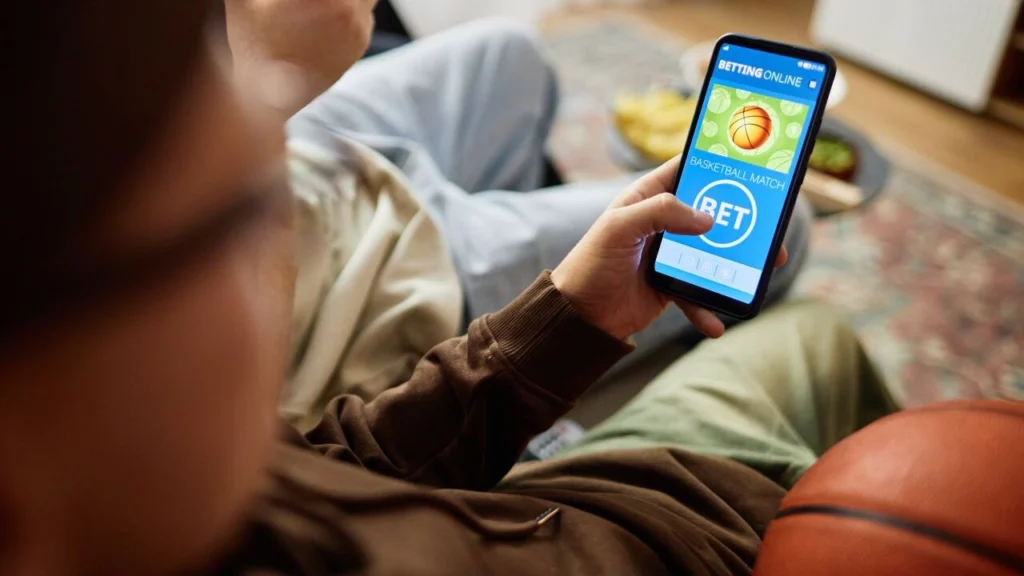
Sports betting has become so embedded in how leagues market themselves that the line between promotion and policy violation can blur inside a single social media post. That is worth paying attention to for reasons that have nothing to do with any individual athlete, but are about the gambling disorder risk rising. Dual diagnosis treatment providers have spent the past several years watching gambling-related referrals climb alongside the expansion of legal sports wagering.
The Post That Triggered the Discussion
On July 29, 2026, the WNBA’s official account posted a video recorded during All-Star Weekend in Chicago showing two players discussing a $400 wager on the outcome of an upcoming game between their teams. The post went up hours before that game. It was deleted shortly afterward.
The league’s collective bargaining agreement prohibits players from wagering on WNBA competition in any form, and provides that a player found to have wagered may be subject to a fine, suspension, or dismissal at the commissioner’s discretion.
A league spokesperson said the post was intended to be lighthearted, that players are aware of the policies prohibiting betting on WNBA games and receive annual training reinforcing them, that the league recognized the post missed the mark and removed it, and that it would use the situation to reemphasize that conversations about wagering on league games can have negative consequences even when intended as a joke. According to reporting on the incident, the players involved were not disciplined.
The league had already faced criticism for the post’s promotion of gambling before it came down. That criticism, rather than the wager itself, is the part with public health relevance. Professional sports leagues across the country now hold formal partnerships with sportsbooks, and betting content is woven into broadcasts, apps and league-owned channels.
Keep in mind that nothing in this account suggests that any player involved has a gambling problem. The point is about the environment, not the individuals.
Mental Health and Gambling Disorder Risk Connection
Gambling disorder is a clinical diagnosis. In the DSM-5, it is the only behavioral addiction classified in the same chapter as substance-related disorders, because it engages overlapping reward pathways in the brain and produces a recognizable pattern of tolerance, withdrawal-like restlessness, loss of control and continued behavior despite consequences.
It also rarely appears by itself. Clinicians consistently find gambling disorder alongside mental health conditions like depression, anxiety disorders, bipolar disorder, ADHD, post-traumatic stress and substance use disorders. The relationship runs in both directions and is genuinely difficult to untangle in an individual case. Someone may gamble to escape depressive symptoms, and mounting financial loss may then deepen those symptoms. Establishing which came first is often less useful clinically than recognizing that both are present and active.
This is where the correlation matters without implying a single cause. Living in an environment saturated with betting advertising does not cause gambling disorder. It does increase exposure and access, and for a person already carrying risk factors, exposure and access are not neutral.
Understanding Dual Diagnosis
Co-occurring disorders, sometimes called dual diagnosis, describe the presence of a mental health condition and a substance use or addictive disorder at the same time in the same person.
Integrated treatment addresses both conditions together, with one clinical team and one coordinated plan, rather than sequentially or in separate systems. The sequential approach, treating one condition and referring out for the other, has a poor track record. Treating gambling behavior while leaving an untreated mood disorder in place tends to produce a short recovery, because the condition that made the behavior functional for the person is still there.
Behavioral health providers that offer dual diagnosis treatment are equipped to assess both dimensions at intake rather than treating one as a complication of the other.
Treatment Approaches for Gambling Disorder and Mental Illness
Cognitive behavioral therapy has the strongest evidence base for gambling disorder. It works on the distorted beliefs that sustain the behavior, including the gambler’s fallacy, the illusion of control and near-miss effects that betting products are specifically designed to exploit. It is also a first-line treatment for depression and anxiety, which is part of why it adapts well to co-occurring presentations.
Dialectical behavior therapy, built around distress tolerance and emotion regulation, suits people whose gambling functions primarily as escape or affect management, and people with significant impulsivity.
Motivational interviewing helps with the ambivalence that is nearly universal early on, particularly when the financial consequences have not yet become undeniable.
Medication does not treat gambling disorder directly, but medication management for a co-occurring depressive, anxiety or bipolar disorder is frequently part of an integrated plan.
Peer support groups such as Gamblers Anonymous provide free, ongoing community support and are commonly used alongside clinical treatment rather than instead of it.
Inpatient and Outpatient Treatment Options
Most people with gambling disorder are treated in outpatient settings, often weekly individual therapy with group work added. Intensive outpatient programming provides more structure for people who need it while allowing them to keep working.
Residential treatment centers become appropriate when a co-occurring mental health condition is severe, when there is meaningful suicide risk, or when a person’s environment makes outpatient treatment unworkable. Financial crisis, legal exposure and relationship collapse frequently accompany advanced gambling disorder, and those pressures are part of what a residential program is structured to stabilize.
Finding Comprehensive Treatment for a Gambling Disorder Risk
When evaluating behavioral treatment centers, ask directly whether the program treats gambling disorder specifically, since many addiction programs are built around substances and treat behavioral addictions only incidentally. Ask whether mental health assessment happens at intake and who provides it, and ask whether psychiatric medication management is available on site.
The National Problem Gambling Helpline at 1-800-522-4700 is free, confidential and available 24 hours a day, and offers call, text and chat. If you or someone you know is in crisis, 988 reaches the Suicide and Crisis Lifeline.
TCD.com’s treatment centers directory lists facilities offering dual diagnosis treatment, mental health treatment and behavioral health services, searchable by location, level of care and accepted insurance including Medicaid.
Author

Quentin Blount
Read Bio
Quentin brings nearly a decade of experience as a writer, editor, and digital publisher to his role as Content Manager for Rehab.com. He aims to help people better understand their treatment options by creating engaging and informative content that is user-friendly, factually accurate, and optimized for search engine visibility. In his free time, Quentin enjoys the company of his friends, family, and his dog, Coop.
Editor

Nikki Wisher, BA
Read Bio
Nikki Wisher is an Atlanta-based content writer who specializes in health and wellness. After earning her BA in English, she has been writing in the health and wellness space for over a decade, with credits ranging from addiction recovery to fitness to aesthetics and skin care. This includes her inclusive running blog forallrunners.com.
Articles About Alcohol & Treatment

Veterans Sober Home Adds Canine Therapy for Co-Occurring PTSD
Veterans Sober Home Adds Canine Therapy for Co-Occurring PTSD August 26, 2026 A veterans sober home in southern Minnesota has added trained shelter dogs to its programming, an addition aimed squarely at residents living with co-occurring disorders. Bravo Zulu House in rural Winnebago launched its canine therapy program in partnership with K9s for Warriors, MPR…
WNBA Betting Post Draws Attention to Gambling Disorder Risk
WNBA Betting Post Draws Attention to Gambling Disorder Risk August 26, 2026 Sports betting has become so embedded in how leagues market themselves that the line between promotion and policy violation can blur inside a single social media post. That is worth paying attention to for reasons that have nothing to do with any individual…

Mental Health Content Tops 100 Billion TikTok Views
Mental Health Content Tops 100 Billion TikTok Views August 25, 2026 Search anxiety, ADHD, or trauma on TikTok or Instagram and you will find licensed psychologists and psychiatrists explaining clinical concepts, correcting misconceptions, and offering guidance. Some of the same accounts also direct viewers toward private practices, paid courses, and books. The scale is substantial,…
Browse Treatment Centers by State
Top National Treatment Centers
-
 Wisconsin
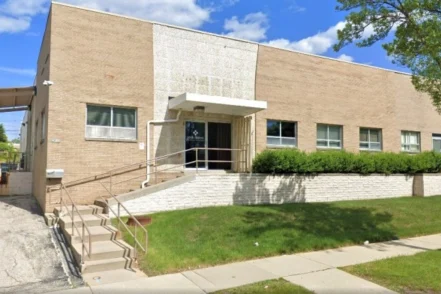
10th Street Comprehensive Treatment Center
4800 South 10th Street Milwaukee, Wisconsin 53221
Treatment Programs
- Alcohol Rehab
- Opioid Addiction
- Drug Rehab
- +4
-
 Arizona
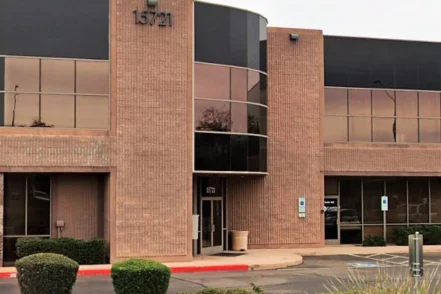
A Better Today Recovery Services
15721 North Greenway Hayden Loop, Suite 205 Scottsdale, Arizona 85260
Treatment Programs
- Alcohol Rehab
- Dual Diagnosis
- Opioid Addiction
- +7
-
 California
A Peace of Mind Sober Living Womens Home
3976 4th Street Riverside, California 92501
Treatment Programs
- Alcohol Rehab
- Opioid Addiction
- Drug Rehab
- +3
-
 Michigan
Above the Water House
4105 Keyes Street Flint, Michigan 48504
Treatment Programs
- Alcohol Rehab
- Dual Diagnosis
- Opioid Addiction
- +4