
Veterans Sober Home Adds Canine Therapy for Co-Occurring PTSD
August 26, 2026
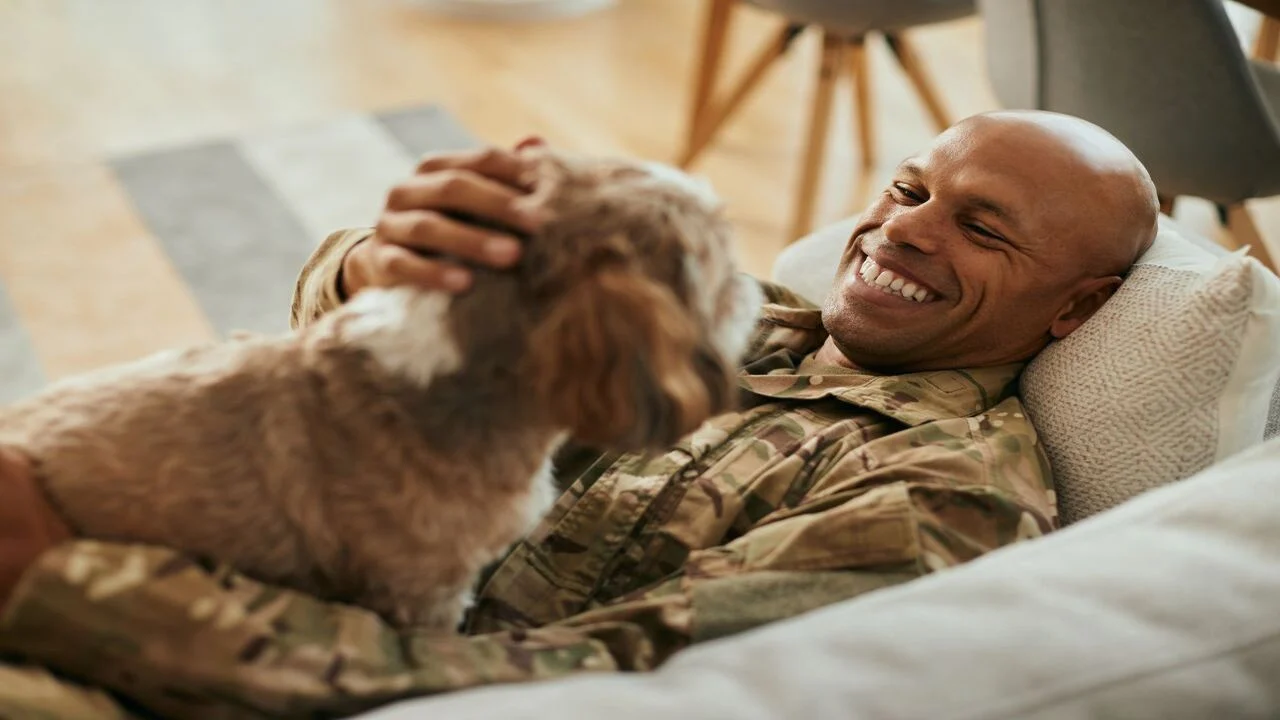
A veterans sober home in southern Minnesota has added trained shelter dogs to its programming, an addition aimed squarely at residents living with co-occurring disorders.
Bravo Zulu House in rural Winnebago launched its canine therapy program in partnership with K9s for Warriors, MPR News reported on August 25.
The house is built for a population that rarely fits neatly into either an addiction program or a mental health program.
Its residents are veterans carrying post-traumatic stress, traumatic brain injuries, or military sexual trauma alongside substance use disorders.
Mental Health and Addiction Connection
Bravo Zulu House opened in May 2025 as a 13-bed residence and is described as the nation’s first sober living home built exclusively for veterans with PTSD.
The name comes from a naval signal meaning well done. Minnesota Governor Tim Walz proclaimed May 28 Bravo Zulu House Day when the home opened.
[cards][card]13 beds in what is described as the nation’s first sober living home built exclusively for veterans with PTSD.[/card][card]About 15 veterans have come through the house since it opened in May 2025.[/card][/cards]
The dogs in the new program are rescued from shelters and trained to work with veterans whose service-related injuries have often led to substance use disorders.
That sequence, trauma first and substance use after, is the practical reason integrated care matters for this group.
One resident, 34-year-old Juan De Leon, lives at the house with Ace, a two-year-old Siberian husky.
What the Program Includes
Canine therapy is one piece of a broader structure at the house.
[list][li]Counseling and formal therapy, with a partnership with Mayo Clinic Health System supporting residents’ medical care[/li][li]Twelve-step meetings and peer support among residents[/li][li]Dog training and daily animal care through the K9s for Warriors Station Dog program, led on site by Elizabeth Westphal[/li][li]Hydroponic farming, fitness, spiritual support, and career planning[/li][li]An ADA-compliant building with a wheelchair lift, private rooms, and wider doorways[/li][/list]
K9s for Warriors, founded in 2011 and based in Ponte Vedra, Florida, trains rescue dogs to work with veterans coping with PTSD, traumatic brain injury, and military sexual trauma.
Its Station Dogs are trained for high-stress environments and stay on site as constant companions rather than going home with one individual.
Why Structure and Second Chances Matter
Executive Director Tim Murray said about 15 men have come through the house so far. Some have graduated, some are still in residence, and a couple relapsed, returned to treatment, and came back.
That framing matters clinically as well as rhetorically. Relapse rates are higher when PTSD goes untreated alongside a substance use disorder, and a residence that treats a return as part of the process rather than a disqualification keeps people connected to care.
What the Evidence Shows and Does Not Show
Animal-assisted programming is popular in veteran mental health settings, and participants frequently report reduced anxiety and improved engagement. The research base is still thin, though, and studies have generally been small.
Animal-assisted therapy is best understood as a support that may improve engagement and comfort, not a replacement for evidence-based treatment.
The established treatments for co-occurring PTSD and substance use disorders remain trauma-focused therapies such as cognitive processing therapy and prolonged exposure, cognitive behavioral therapy for substance use, and medication management where indicated.
A residence that adds dogs to that foundation is doing something different from a program that offers dogs instead of it.
Finding Comprehensive Treatment
Families looking for behavioral health treatment for a veteran should ask specific questions. Does the program screen for and treat PTSD directly, or does it refer out?
Which trauma therapies do clinicians actually deliver? Is there a psychiatrist or prescriber involved? What does the transition look like after residential care ends?
Sober living and recovery residences fill a real gap after formal treatment, but they vary widely in what clinical services they include. Confirming that difference up front prevents a mismatch later.
The Treatment Centers Directory lets you compare dual diagnosis treatment programs and mental health treatment facilities by location, level of care, and the conditions they treat. Call 800-908-4823 (Sponsored) to learn more about treatment options near you.
Author

Peter Lee, PhD
Read Bio
Peter W.Y. Lee is a writer and historian of American history during the Cold War. His primary focus is the relationship between youth and popular culture and its impact on U.S. society during the twentieth century. He has published widely on how the public has used popular culture as a mechanism to address political and social shifts throughout time
Editor

Eric Owens
Read Bio
Eric Owens has been a writer and editor for various businesses as well as his own successful websites. He has extensive experience creating content in the health and wellness space and the sustainability space. He holds a bachelor degree in Philosophy which helped him with presenting complex information in a simple way that all audiences can understand.
Articles About Alcohol & Treatment
A Guide to Veterans’ Drug Rehab & Addiction Treatment
A Guide to Veterans’ Drug Rehab & Addiction Treatment Addiction is no respecter of persons. It’s an enemy that can strike anyone, anywhere, and at any time. It does not discriminate based on age, gender identity, sexual orientation, color, or creed. It is an equal opportunity adversary. In fact, a 2020 report from the Centers…

How Your Environment Impacts Recovery
How Your Environment Impacts Recovery Learning how your environment impacts recovery is an important lesson to learn. In 2010, I made the terrible decision to get behind the wheel after drinking too many glasses of wine. A couple of miles away from my apartment, I crashed into another car. I seriously injured two of its…

Do the Foods You Eat in Early Recovery Matter?
Do the Foods You Eat in Early Recovery Matter? You may hear folks in recovery with a bit of time under their belt tell you not to worry about what foods you eat in early recovery. In fact, some sobriety literature even encourages carrying around bags of candy to replace the sugar that you may…
Browse Treatment Centers by State
Top National Treatment Centers
-
 Florida
1 Solution Detox – CLOSED
2901 Broadway Ave West Palm Beach, Florida 33407
Treatment Programs
- Alcohol Rehab
- Opioid Addiction
- Drug Rehab
- +0
-
 California
10 Acre Ranch
8605 Janet Avenue, Riverside, CA 92503
Treatment Programs
- Alcohol Rehab
- Dual Diagnosis
- Opioid Addiction
- +7
-
 Wisconsin
10th Street Comprehensive Treatment Center
4800 South 10th Street, Milwaukee, WI 53221
Treatment Programs
- Alcohol Rehab
- Opioid Addiction
- Drug Rehab
- +8
-
 Oklahoma
GRAND Addiction Recovery Center
6333 East Skelly Drive, Tulsa, OK 74135
Treatment Programs
- Alcohol Rehab
- Dual Diagnosis
- Opioid Addiction
- +4