
Youth Mental Health Crisis in 2026: What Families Need to Know

A new outlook report from JED, a leading nonprofit focused on youth suicide prevention and mental health, paints a sobering picture of the landscape facing young people in 2026.
It signals urgent implications for families navigating behavioral health treatment options.
The report identifies three converging crises: digital systems built for profit rather than care, public mental health infrastructure being cut precisely when it’s needed most and deepening social isolation that is closing off traditional pathways to connection and purpose.
Together, these forces are intensifying mental health challenges for teens and young adults at a time when access to comprehensive treatment is becoming harder to secure.
For families researching mental health treatment facilities or dual diagnosis programs, understanding these trends can help clarify both the scope of the crisis and the urgency of acting early.
The Digital Mental Health Risk No One Is Talking About Enough
One of the report’s most striking findings concerns artificial intelligence. AI systems are already shaping the emotional lives of young people, influencing how they think, how they process emotions, and in some documented cases, contributing to suicidal ideation.
Yet clinical safeguards, safety standards and accountability frameworks have not kept pace with the technology’s rapid expansion.
This matters for behavioral health treatment professionals and families alike. Teens are increasingly spending time in digital environments that were designed to maximize engagement, not support emotional development.
When those systems go wrong, the consequences can include anxiety, depression, distorted thinking and crisis-level distress. All of these may require professional intervention at a residential or outpatient mental health treatment facility.
The report does highlight one model of responsible AI development. The journaling app Mirror, developed by the Child Mind Institute.
The app is designed to detect warning signs of mental health distress and guide users toward trusted adults and crisis resources like the 988 Suicide and Crisis Lifeline.
It represents what clinically grounded, safety-first technology can look like, though such tools remain the exception rather than the rule.
Mental Health and Addiction Connection
Social isolation, economic stress and chronic anxiety don’t just affect mood. They are well-established risk factors for co-occurring substance use disorders.
When young people lack stable social connection, trusted adults and clear pathways into the workforce, they are more vulnerable to self-medicating with alcohol or drugs.
The JED report notes that youth unemployment is currently at some of its highest levels since 2021, and that many young men in particular are struggling silently.
According to Surgo Health data cited in the report, more than three-quarters of young men dealing with mental health challenges don’t want to confide in their parents and more than half believe they don’t need professional help.
That combination of isolation and resistance to care is a classic dual diagnosis risk profile. It’s one that families and clinicians need to recognize before a mental health challenge becomes a substance use disorder as well.
Understanding Dual Diagnosis in This Context
Co-occurring disorders, also called dual diagnosis, refers to the simultaneous presence of a mental health condition such as depression, anxiety or PTSD alongside a substance use disorder.
Research consistently shows that integrated treatment addressing both conditions at the same time produces better outcomes than treating each in isolation.
The trends JED outlines, anxiety driven by political instability, depression linked to isolation and trauma from school safety fears, are exactly the types of underlying conditions that frequently become entangled with substance misuse.
For families seeking help, finding a behavioral health treatment center equipped to assess and treat co-occurring disorders is critical.
Treatment Approaches and What to Look For
The behavioral health challenges described in the JED report, such as anxiety, depression, social withdrawal and crisis-level distress, respond well to several evidence-based treatment modalities:
Cognitive Behavioral Therapy (CBT) helps young people identify and reframe distorted thought patterns, making it effective for depression, anxiety and substance use disorders simultaneously.
Dialectical Behavior Therapy (DBT) is particularly well-suited to adolescents and young adults struggling with emotional dysregulation, self-harm urges and relationship difficulties.
Trauma-informed therapy is essential for young people whose mental health challenges are rooted in adverse experiences, including community violence, family instability or school safety threats.
Medication management, when appropriate, can stabilize mood disorders and support engagement in therapy, particularly for young people presenting with severe depression, bipolar disorder or anxiety.
Residential treatment centers offer the most intensive level of care, providing a structured therapeutic environment for young people in crisis or those who haven’t responded to outpatient approaches.
Outpatient programs, including intensive outpatient (IOP) and partial hospitalization programs (PHP), allow young people to receive robust support while remaining in their communities.
Finding Comprehensive Treatment
The JED report underscores that waiting for a young person to reach crisis point is no longer a viable approach.
The systems meant to catch struggling youth earlier, such as school mental health supports, Medicaid coverage and crisis hotlines, are under strain.
Families may need to take a more proactive role in identifying behavioral health resources. When searching for support, look for:
- Facilities that treat depression and anxiety alongside co-occurring conditions
- Mental health treatment facilities with dedicated adolescent and young adult programs
- Dual diagnosis treatment programs that address both mental health and substance use
- Residential treatment centers for young people in acute distress.
Treatmentcentersdiretory.com offers a list of treatment facilities that can help you if you’re struggling with mental health or addiction. You can also call 800-908-4823 (Sponsored) for additional support.
Editor

Eric Owens
Read Bio
Eric Owens has been a writer and editor for various businesses as well as his own successful websites. He has extensive experience creating content in the health and wellness space and the sustainability space. He holds a bachelor degree in Philosophy which helped him with presenting complex information in a simple way that all audiences can understand.
Articles About Alcohol & Treatment

A Guide to Veterans’ Drug Rehab & Addiction Treatment
A Guide to Veterans’ Drug Rehab & Addiction Treatment Addiction is no respecter of persons. It’s an enemy that can strike anyone, anywhere, and at any time. It does not discriminate based on age, gender identity, sexual orientation, color, or creed. It is an equal opportunity adversary. In fact, a 2020 report from the Centers…

How Your Environment Impacts Recovery
How Your Environment Impacts Recovery Learning how your environment impacts recovery is an important lesson to learn. In 2010, I made the terrible decision to get behind the wheel after drinking too many glasses of wine. A couple of miles away from my apartment, I crashed into another car. I seriously injured two of its…

Do the Foods You Eat in Early Recovery Matter?
Do the Foods You Eat in Early Recovery Matter? You may hear folks in recovery with a bit of time under their belt tell you not to worry about what foods you eat in early recovery. In fact, some sobriety literature even encourages carrying around bags of candy to replace the sugar that you may…
Browse Treatment Centers by State
Top National Treatment Centers
-
 Florida
1 Solution Detox – CLOSED
2901 Broadway Ave West Palm Beach, Florida 33407
Treatment Programs
- Alcohol Rehab
- Opioid Addiction
- Drug Rehab
- +0
-
 California
10 Acre Ranch
8605 Janet Avenue, Riverside, CA 92503
Treatment Programs
- Alcohol Rehab
- Dual Diagnosis
- Opioid Addiction
- +7
-
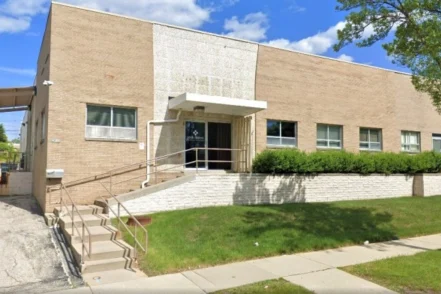 Wisconsin
10th Street Comprehensive Treatment Center
4800 South 10th Street, Milwaukee, WI 53221
Treatment Programs
- Alcohol Rehab
- Opioid Addiction
- Drug Rehab
- +8
-
 Oklahoma
GRAND Addiction Recovery Center
6333 East Skelly Drive, Tulsa, OK 74135
Treatment Programs
- Alcohol Rehab
- Dual Diagnosis
- Opioid Addiction
- +4