
Outcomes Data Gives Families a Way to Compare Treatment Centers
Published September 14, 2026

Families comparing dual diagnosis treatment programs usually work with brochures, phone calls and a gut feeling. Almost no provider reveals what happened to the people who went through the door. A national behavioral health company out in Tennessee just released 10 years of symptom-reduction data benchmarked against national averages and whether those particular programs are a fit.
Odyssey Behavioral Healthcare is headquartered in Franklin. They’ve been active on the scene since 2015.
A Look at the Report
Across mental health and substance use programs, clients experienced an average 50% drop in overall symptom severity compared with a 45% national average. Across residential eating disorder programs, the average reduction in eating disorder symptom severity was 59%.
Program-level results varied. STR Behavioral Health residential programs in Pennsylvania reported a 68% reduction in overall symptom severity against the 45% national average. Clearview Treatment Programs residential clients saw a 47% reduction.
Co-Occurring Numbers in The Volunteer State
Two results speak directly to folks with mental health and substance use disorders.
Lifeskills Behavioral Health in Florida reported a 49% reduction in overall symptom severity among clients described as having complex, co-occurring presentations. Magnolia Creek in Alabama treats co-occurring substance use and eating disorders reported a 76% reduction in substance use symptoms against a 44% national average.
The Magnolia Creek figure matters because eating disorders and substance use disorders co-occur more often than most families expect. Programs equipped to treat both simultaneously are comparatively rare.
A dual diagnosis means a person has a substance use disorder and a mental health condition at the same time. Depression, anxiety and eating disorders are the most common pairings.
Treating one and ignoring the other tends to fail in a predictable way. Untreated depression drives substance use and vice versa. Integrated dual diagnosis treatment addresses both in the same treatment plan with the same clinical team, rather than sending someone through addiction treatment first and mental health treatment later.
Measurement Tools in Action
Odyssey measures outcomes through a partnership with eBASIS and used the BASIS-24 and the EAT-26 at multiple points during treatment. The BASIS-24, or Behavior and Symptom Identification Scale, is a self-reported measure covering domains including mental health issues that lead to substance use and emotional lability. The EAT-26, or Eating Attitudes Test, screens for eating disorder symptoms and attitudes.
Both are validated instruments to allow a provider to benchmark against national data rather than grading its own homework.
STR Behavioral Health introduced outcomes measurement for Overwatch for veterans and first responders by using the Post-Traumatic Growth Inventory. An early cohort reported positive growth across personal strength, new possibilities, relationships with others, appreciation of life and spiritual or existential change.
Consistency of improvement across populations that are difficult to treat stands out.This transparency tells patients and their loved ones that a clinical approach is working.
Comprehensive Care for All
Our online directory lists mental health treatment facilities and residential programs with filters for dual diagnosis capability, level of care and location. That way, families can shortlist programs equipped to treat addiction and mental health conditions together.
Feel free to also call 800-908-4823 (Sponsored) for free, confidential guidance from an expert, 24/7.
Author

Eric Owens
Read Bio
Eric Owens has been a writer and editor for various businesses as well as his own successful websites. He has extensive experience creating content in the health and wellness space and the sustainability space. He holds a bachelor degree in Philosophy which helped him with presenting complex information in a simple way that all audiences can understand.
Editor

Peter Lee, PhD
Read Bio
Peter W.Y. Lee is a writer and historian of American history during the Cold War. His primary focus is the relationship between youth and popular culture and its impact on U.S. society during the twentieth century. He has published widely on how the public has used popular culture as a mechanism to address political and social shifts throughout time
Articles About Alcohol & Treatment
Outcomes Data Gives Families a Way to Compare Treatment Centers
Outcomes Data Gives Families a Way to Compare Treatment Centers Published September 14, 2026 Families comparing dual diagnosis treatment programs usually work with brochures, phone calls and a gut feeling. Almost no provider reveals what happened to the people who went through the door. A national behavioral health company out in Tennessee just released 10…

Half of Addiction Patients Also Have Mental Health Conditions
Half of Addiction Patients Also Have Mental Health Conditions Published September 11, 2026 Roughly half of patients with substance use disorders also have mental health problems, according to a 2023 study. That overlap is the clinical argument for dual diagnosis treatment and is one reason a longer residential model is drawing attention. That’s where residential-plus…

428,000 Indiana Adults Have Addiction and Mental Illness
428,000 Indiana Adults Have Addiction and Mental Illness Published September 11, 2026 About 428,000 adults in Indiana had a mental illness and a substance use disorder in 2025, according to the Substance Abuse and Mental Health Services Administration. Most of these folks know that they’re not getting dual diagnosis treatment that addresses both conditions together.…
Browse Treatment Centers by State
-
 California
Clear Behavioral Health
328 North Prospect Avenue, Redondo Beach, CA 90277
Treatment Programs
- Dual Diagnosis
- Drug Rehab
- Young Adult Rehab
- +8
-
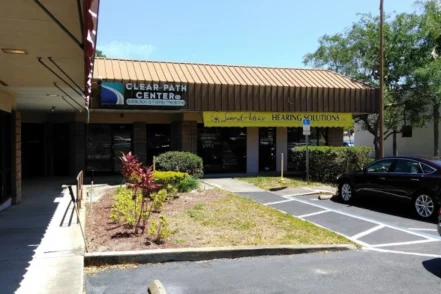 Florida
Clear Path Clinic
3177 4th Street North St. Petersburg, Florida 33704
Treatment Programs
- Drug Rehab
- +-2
-
 Texas
TexasClearfork Academy
7820 Hanger Cutoff Road Fort Worth, Texas 76135
Treatment Programs
- Alcohol Rehab
- Dual Diagnosis
- Opioid Addiction
- +2
-
 Utah
UtahGMS Counseling Clearfield
370 S 500 East, Suite 250 Clearfield, Utah 84015
Treatment Programs
- Alcohol Rehab
- Dual Diagnosis
- Opioid Addiction
- +4