
How Social Media Impacts Teen Mental Health

Social media has quickly evolved over the past decade and is here to stay, as is its impact on users’ mental health, many of whom are adolescents.
Around 95% of teenagers in the U.S. use at least one social media platform, highlighting the widespread impact on adolescent mental health.
Research also shows that over half the number of teens agree they’d find it very challenging to stop using social media.
Social Media’s Effects on Teen Mental Health
While these platforms can provide connection and support, they’re also linked to significant negative mental health outcomes that may require treatment, such as online therapy.
The impact isn’t straightforward, but overall, social media use can contribute to eating disorders, depression, anxiety, sleep issues and self-harm. These outcomes grow worse with excessive or problematic use.
Teens are especially hit harder than adults. Adolescence is a vulnerable time, particularly in brain development. The brain naturally experiences significant changes between ages 10 and 18.
These changes place teens at higher risk for impulsive and self-harming behaviors, especially when combined with depression or anxiety.
However, frequent social media use impacts the prefrontal cortex and the amygdala. These areas of the brain are responsible for impulse control, emotions and social behaviors.
Social media can exacerbate these regions’ natural maturation process, resulting in mental conditions that young people aren’t prepared to handle by themselves.
Risks of Social Media Use for Teens
Researchers have shown that children with strong digital presences are, ironically, at higher risks of isolation in the real world.
Teens become emotionally invested in their social media activities, often at the exclusion of all else, contributing to the youth mental health crisis.
Parents should understand their teen’s relationship with social media. Here are some warning signs of harmful behavior:
- Spending excessive time (3+ hours) on social media per day
- Comparing themselves to others online
- Participating in cyberbullying
- Following harmful accounts
- Scrolling instead of sleeping
- A lack of real-life relationships
Managing Social Media for Better Mental Health
Many parents recognize that banning their teen’s access to social media is unrealistic.
Managing screen time can create a healthy balance so that young people can still enjoy the benefits of social media while minimizing the negative consequences. The following tips may help:
- Have open conversations with your teen about mental health
- Enforce time limits, particularly before bed
- Create chances for in-person connections
- Help them with digital literacy
Being a guardian or parent often means making hard choices, especially when doing so risks the ire of your kids.
But the alternative may increase the risk of long-term mental health disorders, including co-occurring conditions with addiction.
When to Seek Mental Health Treatment for Teens
For kids and their parents who’ve already experienced first-hand how social media leads to self-harm, help is always close by, from unofficial interventions to guidance from professional experts.
Search treatmentcenterdirectory.com’s directory of treatment centers or call 800-908-4823 (Sponsored) to take the first steps to a healthier online future today.
Author

Mariah Bourne, M.A.
Read Bio
Mariah Bourne received her Master of Arts in Community Social Psychology from the University of Massachusetts Lowell. She later served as a Research Associate in many studies focused on education, addiction, and treatment, including one examining the efficacy of an LED treatment device in reducing opioid cravings. Currently, she works as a freelance writer and is dedicated to providing helpful information to those seeking recovery from substance abuse.
Editor

Eric Owens
Read Bio
Eric Owens has been a writer and editor for various businesses as well as his own successful websites. He has extensive experience creating content in the health and wellness space and the sustainability space. He holds a bachelor degree in Philosophy which helped him with presenting complex information in a simple way that all audiences can understand.
Articles About Alcohol & Treatment

Dual Diagnosis Treatment Insights From School Gaming Study
Dual Diagnosis Treatment Insights From School Gaming Study Published September 15, 2026 A trial of 1,800 German adolescents showed that cognitive behavioral therapy prevented gaming disorder far better than media education. This result had direct relevance for mental health treatment facilities and dual diagnosis treatment programs serving teens with co-occurring conditions. Adolescent gamers compulsively show…

Outcomes Data Gives Families a Way to Compare Treatment Centers
Outcomes Data Gives Families a Way to Compare Treatment Centers Published September 14, 2026 Families comparing dual diagnosis treatment programs usually work with brochures, phone calls and a gut feeling. Almost no provider reveals what happened to the people who went through the door. A national behavioral health company out in Tennessee just released 10…

Half of Addiction Patients Also Have Mental Health Conditions
Half of Addiction Patients Also Have Mental Health Conditions Published September 11, 2026 Roughly half of patients with substance use disorders also have mental health problems, according to a 2023 study. That overlap is the clinical argument for dual diagnosis treatment and is one reason a longer residential model is drawing attention. That’s where residential-plus…
Browse Treatment Centers by State
Top National Treatment Centers
-
 Missouri
Teen Challenge Of Saint Louis
2650 Appletree Acres Lane, High Ridge, MO 63049
Treatment Programs
- Alcohol Rehab
- Dual Diagnosis
- Opioid Addiction
- +5
-
 California
Community Social Model Advocates Hobie House
1299 And 1301 Yosemite Parkway Merced, California 95340
Treatment Programs
- Alcohol Rehab
- Opioid Addiction
- Drug Rehab
- +3
-
 Oregon
Telecare Recovery Center Gresham
4101 Northeast Division Street Gresham, Oregon 97030
Treatment Programs
- Dual Diagnosis
- Adult Program
- Senior Rehab
- +2
-
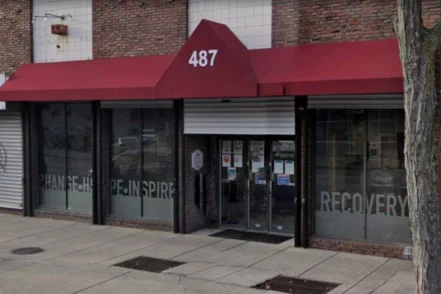 Massachusetts
New Beginnings Peer Recovery Center
487 Essex Street, Lawrence, MA 01840
Treatment Programs
- Alcohol Rehab
- Dual Diagnosis
- Opioid Addiction
- +13