
Connecticut Mental Health Treatment Facilities Get New Data Tool
Published September 29. 2026

Residents, researchers and journalists out in Connecticut have a better system for tracking mental health and substance use trends across the state. The state’s Department of Mental Health and Addiction Services, UConn Health and the CTData Collaborative unveiled a redesigned State Epidemiological Outcomes Workgroup Prevention Data Portal at a press conference.
The portal doesn’t make its own datasets. Instead, it pulls public info from multiple sources into one hub via a “no wrong door” approach.
The Portal in Action
Sarju Shah is a director at DMHAS. For her, the portal is a joint effort to bring information from lots of different sources into one place. That’s because no single agency or dataset can capture the full picture of mental health and substance abuse in Connecticut. Data helps experts like Shah ask important questions.
Jennifer Sussman is a clinical research associate at UConn Health’s Center for Prevention Evaluation and Statistics and demonstrated the tool with cannabis data. Cannabis use among Connecticut residents has risen from 8.5% in 2013 to 18%. Despite legalization in 2021, a large share of users are under 21, and the portal can pinpoint the number of at-risk youth ages 12 to 17 who’ve tried marijuana in any given neighborhood.
The portal also tracks “disconnected youths.” These are older teens who aren’t working or in school. These teenagers are usually missed by school surveys and are at increased risk for substance abuse while not in traditional prevention programs.
Better Data Matters for Treatment
Co-occurring disorders refer to substance use disorders and mental health conditions like depression in the same person. Coordinated treatment helps because each condition worsens the other when left untreated. Better outcomes occur when providers treat both together rather than separate.
In this context, good regional data changes what behavioral treatment centers can plan for. If a region shows rising anxiety and depression alongside escalating substance use, dual diagnosis treatment becomes an urgent need rather than an add-on. Co-occurring disorders rarely announce themselves, and families might spend months trying different providers before finding the right integrated care.
Portal data can also show gaps. Tracking disconnected youth tells planners which young people are outside the systems that normally refer them to care. This shapes where outreach dollars should go.
Mental Health Treatment in Connecticut & Beyond
Outside or inside, options are available. To start, browse through our online directory for mental health treatment facilities by city and region.
Call 800-908-4823 (Sponsored) to speak with an expert and locate comprehensive mental health treatment anywhere in the country.
Author

Terri Beth Miller, PhD
Read Bio
Terri Beth received her PhD in English literature from the University of Tennessee Knoxville and is an educator and disability studies scholar. For more than a decade, she has written extensively in the fields of mental health and addiction recovery and fiercely advocates for the destigmatization of mental illness.
Editor

Peter Lee, PhD
Read Bio
Peter W.Y. Lee is a writer and historian of American history during the Cold War. His primary focus is the relationship between youth and popular culture and its impact on U.S. society during the twentieth century. He has published widely on how the public has used popular culture as a mechanism to address political and social shifts throughout time
Articles About Alcohol & Treatment

Illinois Crisis Recovery Center Marks First Year of Care
Illinois Crisis Recovery Center Marks First Year of Care Published September 30, 2026 The DuPage County Crisis Recovery Center in Wheaton, Illinois is exemplifying what local behavioral health care should look like. The public facility serves people experiencing mental health and substance use crises. It gives people an option besides an emergency room or jail.…

Dual Diagnosis Treatment Campus Planned in Des Moines, Iowa
Dual Diagnosis Treatment Campus Planned in Des Moines, Iowa Published September 30, 2026 Despite the presence of treatment centers, central Iowa has never had a single entry point for folks whose depression arrives wrapped around a drinking problem. A $1 million Polk County grant approved unanimously will help fill that gap. They plan to erect…

California Proposes $50.6M Behavioral Campus in Santa Monica
California Proposes $50.6M Behavioral Campus in Santa Monica Published September 29, 2026 A provider that has treated addiction on the same stretch of Pico Boulevard in Santa Monica since the 1970s wants to tear down three aging buildings and replace them with a four-story recovery campus. They’ll spend $50.6 million to go a long way…
Browse Treatment Centers by State
-
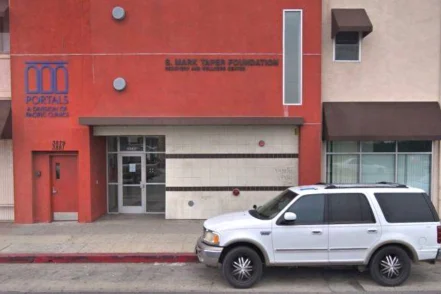 California
Portals House
3881 South Western Avenue Los Angeles, California 90062
Treatment Programs
- Dual Diagnosis
- Adult Program
- Senior Rehab
- +1
-
 California
Pacific Clinics – Portals Mariposa Clubhouse
2500 Wilshire Boulevard, Los Angeles, CA 90057
Treatment Programs
- Dual Diagnosis
- Young Adult Rehab
- Adult Program
- +6
-
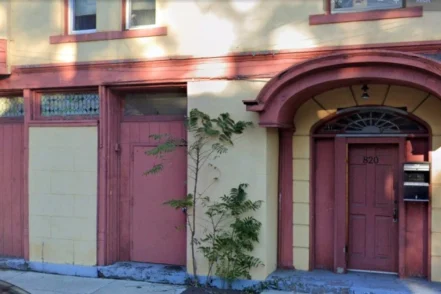 New York
820 Supportive Living
820 River Street Troy, New York 12180
Treatment Programs
- Alcohol Rehab
- Opioid Addiction
- Drug Rehab
- +3
-
 Maine
Maine205 Ocean Avenue Psychological and Educational Services
205 Ocean Avenue Portland, Maine 04103
Treatment Programs
- Drug Rehab
- Dual Diagnosis
- LGBTQ Friendly Rehab
- +0