
UCLA Study Ties Teen Substance Use to Higher Suicide Risk
Published June 22, 2026

For families weighing how to help a teenager with drug issues, a new UCLA study delivers a clear message. Substance use and mental health are deeply connected, and treating them together through dual diagnosis treatment can safely enhance their recovery. The researchers found that adolescents who use drugs like cannabis are more likely to experience psychological distress and to have seriously considered or attempted suicide.
The study comes from the UCLA Center for Health Policy Research, drawing on the 2022 to 2024 California Health Interview Surveys. The findings don’t apply just to the many treatment facilities throughout the Golden State, but point directly to why comprehensive, integrated care belongs at the center of how we respond to adolescent mental health and addiction across the nation.
Linking Mental Health to Addictions
The data show how tightly drugs and mental health conditions are linked. Among California adolescents ages 12 to 17 who currently use substances, 46% experienced serious psychological distress in the past year, compared with 27% of teens who don’t use substances. Current use was defined as using marijuana or THC, binge drinking, e-cigarettes, or cigarettes in the past month, and 10% of adolescents reported current use.
When substance use and distress occur together, the numbers grow starker. Nearly half of the teens with both psychological distress and current substance use reported suicidal thoughts or attempts in the prior year, compared with 24% who had distress but didn’t use substances.
Many young people do seek help, including turning to chatbots for advice. But while AI has its uses, this trend merely reflects a growing gap of mental health providers for young people.
The Combination is Dangerous
The study found that adolescents who use substances and have psychological distress are nearly 6x as likely to report suicidal thoughts or attempts as teens who use substances but have no distress. Even without distress, teens who use drugs reported suicidal thoughts or attempts at 4x the rate of non-using peers.
“Substance use combined with psychological distress is a dangerous mix,” noted Imelda Padilla-Frausto, the study’s lead author. She emphasized prevention, early intervention and treatment for adolescents who have both conditions to avoid crises.
Understanding Dual Diagnosis
When an individual has both a substance use disorder and a mental health condition, clinicians call it a dual diagnosis, or co-occurring disorders. Treating only one side tends to leave the other to undermine recovery. Integrated treatment addresses both at once. Residential and outpatient facilities offer various approaches.
The study reinforces this directly. Its policy recommendations included tailored early intervention for high-risk adolescents and placing mental health and substance use services in the same location. That way, families don’t have to assemble fragmented care on their own.
Treatment Options for Mental Health and Addiction
Comprehensive care for teens with co-occurring disorders can take several forms. Residential treatment centers offer round-the-clock support for higher-acuity needs, while outpatient providers offer structured care around school and family life. Clinicians use evidence-based behavior therapy alongside medications when appropriate. For adolescents, family involvement often comprises a core part of the plan.
If this research resonates with what you’re seeing at home, look for integrated care. Search mental health treatment facilities that offer dual diagnosis treatment, ask whether a program treats substance use and mental health together rather than separately, and confirm experience with adolescents specifically.
Use the listings in our directory to find comprehensive mental health and addiction treatment anywhere in the USA. Or dial 800-908-4823 (Sponsored) to chat with an expert.
If you or someone you know is in crisis or thinks about suicide, call or text 988, the Suicide and Crisis Lifeline, or talk to a mental health professional as soon as possible.
Author

Courtney Myers, MS
Read Bio
Courtney Myers has more than 15 years of experience in online writing and editing. Since graduating from N.C. State University with an MS in Technical Communication, she’s helped clients improve their visibility and reach through expert-level content creation. She specializes in addiction recovery and behavioral healthcare topics.
Editor

Peter Lee, PhD
Read Bio
Peter W.Y. Lee is a writer and historian of American history during the Cold War. His primary focus is the relationship between youth and popular culture and its impact on U.S. society during the twentieth century. He has published widely on how the public has used popular culture as a mechanism to address political and social shifts throughout time
Articles About Alcohol & Treatment

Springfield, Missouri Approves $500K Mental Health Treatment Resource Map
Springfield, Missouri Approves $500K Mental Health Treatment Resource Map Published October 2, 2026 The city of Springfield has allocated $500,000 to create a map of mental health treatment and substance use resources in the city. To be clear, the state of Missouri has plenty of options for folks dealing with additions, but local recovery advocates…

Stone County, Mississippi Program Now Serves Women Only
Stone County, Mississippi Program Now Serves Women Only Published October 2, 2026 A church out in Mississippi changed its recovery program recently just for women. The Church of Turning Points in Stone County split its Life Recovery Program to create a women-only meeting. The group gathers each Thursday evening at 6:30 at the Sunflower Community…

UC San Diego Awarded $12.6 Million for Dual Diagnosis Research
UC San Diego Awarded $12.6 Million for Dual Diagnosis Research Published October 1, 2026 A new $12.6 million federal investment in addiction science could change how we use dual diagnosis treatment. Researchers at UC San Diego in California received the five-year award from the National Institute on Drug Abuse to launch the Polysubstance Addiction Research…
Browse Treatment Centers by State
-
 California
California Center for Change
68 Leland Avenue, 34532, San Francisco, CA 94134
Treatment Programs
- Women's Rehab
- Dual Diagnosis
- Alcohol Rehab
- +2
-
 South Carolina
Ace Recovery for Men ARM
1477 Ted Melton Road Chesterfield, South Carolina 29709
Treatment Programs
- Alcohol Rehab
- Opioid Addiction
- Drug Rehab
- +3
-
 Alabama
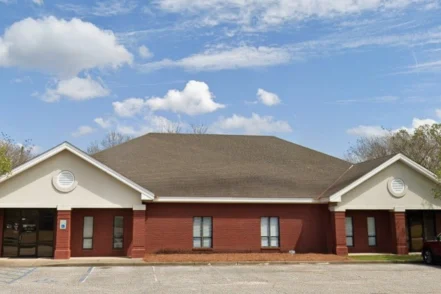
Bradford Health Services Montgomery
386 Saint Lukes Drive Montgomery, Alabama 36117
Treatment Programs
- Alcohol Rehab
- Opioid Addiction
- Drug Rehab
- +4
-
 West Virginia
Clifford and McNeely Counseling
4501 MacCorkle Avenue, Suite 103, South Charleston, WV 25309
Treatment Programs
- Dual Diagnosis
- Drug Rehab
- DUI/DWI Program
- +2