



Austin, TX Drug & Alcohol Treatment Centers

14 results nearby

Looking for help with addiction in Austin, TX?

NameAddressTreatment ProgramsInsuranceMedia

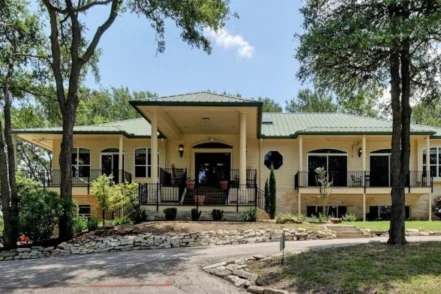
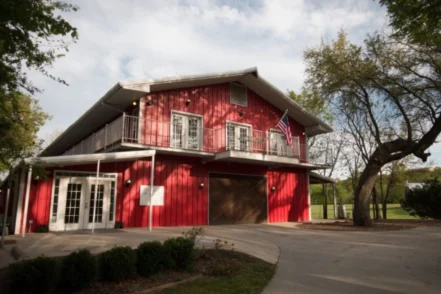
Austin Recovery Hicks Family Ranch

13207 Wright Road
Buda, Texas 78610

Treatment Programs

  • Alcohol Rehab
  • Dual Diagnosis
  • +6

Insurance

  • Medicaid
  • Private insurance
  • +3

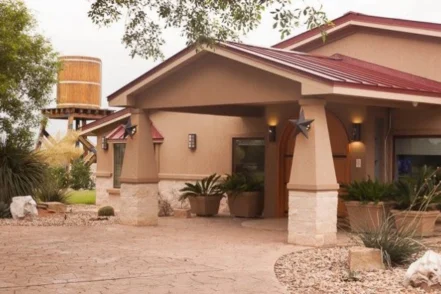
Any Length Retreat

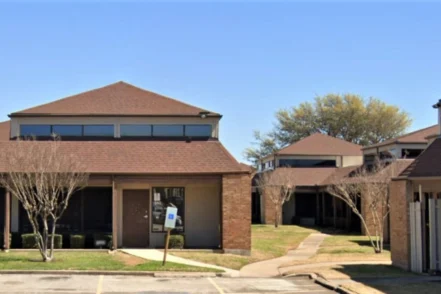
15401 Cameron Road
Pflugerville, Texas 78660

Treatment Programs

  • Alcohol Rehab
  • Opioid Addiction
  • +3

Insurance

  • Self-pay options
  • Private insurance
Get Help Now
Confidential & Free
512-270-3178
Sponsored
  • Learn about treatment options
  • Find helpful resources
  • Available 24/7

BRC Benchmark Recovery Center

11503 Parsons Road
Manor, Texas 78653

Treatment Programs

  • Alcohol Rehab
  • Drug Rehab
  • +1

Insurance

  • Self-pay options
  • Private insurance

New Hope Ranch

11908 Sparks Road
Manor, Texas 78653

Treatment Programs

  • Drug Rehab
  • Adult Program
  • +1

Central Texas VA Health Care System Cedar Park CBOC

600 N. Bell Boulevard
Cedar Park, Texas 78613

Treatment Programs

  • Dual Diagnosis
  • Adult Program
  • +4

Insurance

  • Self-pay options
  • Financial aid
  • +2

LifeSteps Council on Alcohol and Drugs

2021 North Mays Street, Suite 500
Georgetown, Texas 78664

Treatment Programs

  • Drug Rehab
  • Alcohol Rehab

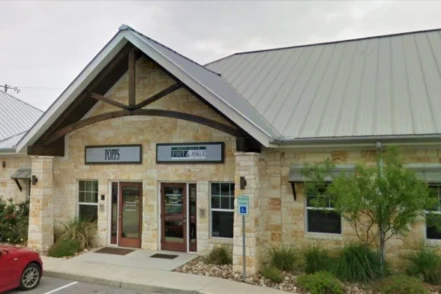
POPPS Prudent Opiate Practices and Psychological Services

1130 Cottonwood Creek Trail, Suite B-1
Cedar Park, Texas 78613

Treatment Programs

  • Dual Diagnosis
  • Opioid Addiction
  • +5

Insurance

  • Self-pay options
  • Private insurance
  • +1

Seton Williamson Medical Plaza

301 Seton Parkway, Suite 103
Round Rock, Texas 78665

Treatment Programs

  • Alcohol Rehab
  • Dual Diagnosis
  • +4

Insurance

  • Self-pay options
  • Private insurance

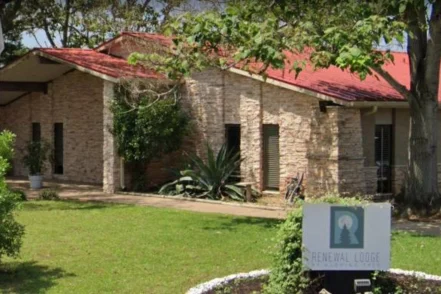
Burning Tree Lodge

122 Fisher Street
Elgin, Texas 78621

Treatment Programs

  • Alcohol Rehab
  • Dual Diagnosis
  • +4

Insurance

  • Self-pay options

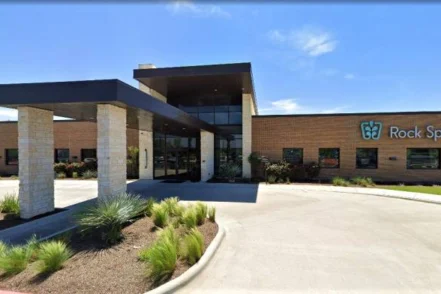
Rock Springs

700 Southeast Inner Loop
Georgetown, Texas 78626

Treatment Programs

  • Alcohol Rehab
  • Dual Diagnosis
  • +5

Insurance

  • Self-pay options
  • Private insurance
  • +2

Nova Recovery Center Wimberley

601 Old Oaks Ranch Road
Wimberley, Texas 78676

Treatment Programs

  • Alcohol Rehab
  • Dual Diagnosis
  • +4

Insurance

  • Self-pay options
  • Private insurance

Spirit Lodge

840 County Road, Suite 420
Spicewood, Texas 78669

Treatment Programs

  • Drug Rehab
  • Alcohol Rehab
  • +0

Insurance

  • Private insurance
  • Self-pay options

Promises Austin

840 County Road 420
Spicewood, Texas 78669

Treatment Programs

  • Alcohol Rehab
  • Dual Diagnosis
  • +5

Insurance

  • Private insurance
  • Self-pay options
  • +1

Another Chance 4 Change

14009 Layne Loop
Leander, Texas 78641

Treatment Programs

  • Drug Rehab

Top Drug Rehab Centers in Texas

Treatment in Austin: The Shape of the Local Map

Austin is the largest treatment market in Central Texas, and our directory lists 40 treatment centers within the city. The city itself offers outpatient and clinical services, whereas counseling practices, opioid treatment programs, intensive outpatient tracks and hospital-affiliated care are spread across the central neighborhoods and the eastern side.

The residential programs tell a different story. Very few of them sit in Austin proper. Instead, they ring the metro at a distance, typically on ranch properties with room for them: south toward Buda, east through Manor and Elgin and west into the Hill Country around Spicewood and Wimberley.

Between them sit the northern suburbs, where Round Rock, Cedar Park and Georgetown offer hospital plazas, a veterans clinic and community counseling along the Interstate 35 corridor.

That is why an Austin search returns addresses in towns you may never have heard of. A ranch outside Elgin and a clinic in Round Rock are both part of how someone in Austin actually gets care, and many people use both in sequence, starting outside the city and stepping back into an outpatient schedule in town.

Your First Call in Austin: How Access Works

There is a wrinkle here that trips people up, so it is worth getting straight. Travis County’s local mental health authority is Integral Care. Its round-the-clock line is 512-472-4357 and that is the number most Austin searches surface.

But the state’s own screening and referral program, OSAR, is contracted to a different organization for this region: Bluebonnet Trails Community Services, based in Round Rock, covers Travis County as part of Region 7. OSAR can be reached at  844-309-6385. OSAR screening is free to any Texas resident, and the counselor refers rather than treats. If one number does not get you where you need to go, try the other.  For a crisis at any hour, call 988.

Nothing requires you to go through either. Texas has no county approval step, so you can reach out to a program on your own and request an assessment. To check one out, the Health and Human Services Commission publishes a searchable list of the facilities it licenses, and a second list of faith-based programs, which are non-medical and sit outside the licensing system.

A program absent from one list may sit on the other. Counselors hold their own credentials, so asking who on staff is licensed should be one of your first questions.

Austin holds nearly every level of care except the residential tier. Recovery housing sits outside licensing entirely, though a 2023 statute set up voluntary accreditation. Certified homes appear in a public directory run by the Texas Recovery Oriented Housing Network, which also handles grievances. That statute forbids a certified house from paying for referrals or claiming accreditation it has not earned. Look a house up rather than taking its word.

Roads, Rail and the Austin Airport

Austin-Bergstrom International Airport (AUS) sits about seven and a half miles southeast of downtown, a 15 to 25 minute drive in ordinary traffic. Many residential programs collect an arriving client, which matters more here because the program may be forty minutes further out. Ask admissions before booking how long the transfer takes.

Driving, everything hangs off Interstate 35, the north-south spine and the source of most of the congestion. MoPac, signed as Loop 1, runs parallel to the west and is the alternative most locals use. US-183 and State Highway 71, called Ben White Boulevard where it crosses the south side, carry the airport approaches, and US-290 runs east to west.

Transit is thinner than a city this size suggests. CapMetro’s MetroRail Red Line is the only rail, running 32 miles from Leander through the northwestern suburbs into downtown across ten stations, and it does not serve the airport.  MetroRapid covers the North Lamar and South Congress corridor and the Burnet and South Lamar corridor. Route 20 links the airport to downtown and the university roughly every 15 to 30 minutes, seven days a week.

If you are planning an outpatient schedule without a car, a program on one of those corridors is realistic; however, a program in the suburbs generally is not. CapMetro is midway through a network-wide redesign, so confirm current routes before you rely on one.

Climate, Creek and Green Space in Austin

Heat organizes the year here. Camp Mabry, Austin’s official weather station, averages 123 days a year at or above 90 degrees on the 1991 to 2020 normals, and 29 of those reach 100. The normal August high is just under 98, though 2023 produced ten consecutive days at 105 or above, a record.

For a stay of a month or more between May and September, outdoor programming happens before about half past eight in the morning or after seven in the evening, with very little in between. Pack light, with a hat and something to carry water. Winters are mild and outdoor schedules run normally.

What Austin does have is water, which is the local answer to the heat. Lady Bird Lake cuts across the city, with the Ann and Roy Butler Hike and Bike Trail looping around it. It is flat and shaded in parts and cooled by a breeze off the water, which keeps it usable into the evening when the trails elsewhere are not.

The Barton Creek Greenbelt offers miles of creekside walking with swimming holes along it, which is more manageable in August than any exposed ridge route. Barton Springs Pool is spring-fed and remains at about 68 to 70 degrees all year. Programs in the central and south parts of the city build these into the week; ask what the warm-weather schedule looks like.

Life After a Program in Austin

The step-down is the thing Austin does well. Because much of the residential capacity sits outside the city and so much of the outpatient capacity sits inside it, moving from one to the other is the normal path rather than an unusual one, and it happens without leaving the region or changing the referral network.

The OSAR line and the state housing directory cover the whole region, so moving from a Hill Country program into south Austin does not restart the search.

Visiting Someone in Treatment in Austin

If your person has gone into a program outside the city, plan travel around the program rather than around Austin. Most residential programs restrict contact for the first week or two and then set visiting hours or family weekends.  Ask admissions for the family policy and any family programming dates before booking anything.

Where to stay depends entirely on the program’s location.  For example, a Hill Country program, a ranch east toward Manor and a clinic in Round Rock are three different drives, so choosing lodging near the program rather than near downtown will save hours over a weekend. A rental car is close to essential for a visiting family.

Between visits, the Lady Bird Lake loop and Zilker Park are the easiest places in the city to spend an hour without planning anything.

Start with the Austin listings above, then widen across Texas if the right program sits beyond the metro.

Common Questions About Treatment in Austin

Common questions about arriving, getting around and what to expect from treatment in Austin. If a question is not covered here, a program’s admissions team can answer it directly.

Can I start treatment in Austin the same week I call?

Sometimes, and it depends on the level of care more than the calendar. Outpatient programs often have quicker openings than residential ones, and the residential programs around Austin are mostly outside the city, which adds a travel step. Ask directly what the current wait is. Going through OSAR on 844-309-6385 can shorten the search because the counselor knows which programs have room.

Is it easier to fly into Austin or drive?

Fly if you are coming any distance. The airport is a short drive from the central city, though a Hill Country program may be another forty minutes beyond that. Driving makes sense from elsewhere in Texas, since Interstate 35 links Austin to Dallas Fort Worth and San Antonio.

What neighborhoods in Austin have treatment programs?

The clinical supply is spread through the central city and the eastern side rather than gathered in one district, with additional capacity north along Interstate 35 in Round Rock, Cedar Park and Georgetown. Of the 40 centers our directory lists inside Austin, most are outpatient or hospital-affiliated. Residential care means leaving the city limits.

Which Austin programs sit near a transit stop?

Programs in the central city stand the best chance, particularly along the North Lamar, South Congress, Burnet and South Lamar corridors that MetroRapid serves. The MetroRail Red Line runs northwest toward Leander rather than through the densest parts of town, and it does not reach the airport. Anywhere in the suburbs, assume you need a car.

Are there evening treatment programs near Austin?

Some, and it is worth asking before anything else if you are keeping a job. Intensive outpatient programs commonly run evening tracks because their clients work. Ask for the actual schedule and what happens when you miss a session, and factor in Interstate 35 traffic if your drive crosses the city at six o’clock.

What should I bring to an Austin program?

For most of the year, bring hot-weather clothing, a hat and shoes you can walk in. If you are going to a program near water, a swimsuit is more useful here than it sounds. Medications should travel in their original containers. Typically, the program will send you a packing list with rules specific to its facility.

Editor

Cary Damerow, BA, LPN

Cary Damerow, BA, LPN

Read Bio

Cary has spent the majority of her 30 plus years as an LPN working toward improving the lives of the most marginalized members of her community. She holds a BA in Liberal Arts and is pursuing her Master’s degree, focusing on public health policy where she can combat healthcare disparity.

GET HELP NOW CALL NOW 800-897-4135
Sponsored