
Psychiatrist Links ADHD to Intense Rejection Sensitivity
August 31, 2026

Anyone who has looked for dual diagnosis treatment knows the frustration of having one condition treated well and another treated barely at all.
A CBS Mornings segment that aired August 24 took up a version of that gap. Dr. Sasha Hamdani, a board-certified psychiatrist and ADHD clinical specialist, joined the program to discuss the relationship between ADHD and rejection sensitive dysphoria, known as RSD.
The topic sits squarely in the territory that comprehensive behavioral health treatment is supposed to cover and often does not. RSD is not a formal diagnosis, so it rarely appears on a treatment plan, and the emotional pain it describes is frequently the reason someone seeks care in the first place.
Mental Health and Addiction Connection
Rejection sensitive dysphoria describes an intense emotional, and sometimes physical, reaction to real or perceived rejection or criticism.
In interviews elsewhere, Hamdani has described it as a strong internal response to being criticized, rejected, or fearing that someone has been disappointed, and has said that nearly everyone with ADHD experiences some component of it.
She has also described its neurological basis as involving heightened amygdala activity, dopamine dysregulation, and weaker prefrontal override, the brain’s capacity to interrupt an emotional reaction before it takes over.
This is why it belongs in a conversation about co-occurring disorders. Emotional dysregulation is not a side issue that resolves once attention and focus improve.
It shapes relationships, work, and the way a person handles stress, and it is often the domain that drives someone toward alcohol or other substances as a way to blunt the response.
Why RSD Slips Through Treatment Planning
RSD does not appear in the DSM-5 as a diagnosis. It is a descriptive term used clinically, most often in the context of ADHD, to name a pattern that patients recognize immediately and that formal criteria do not capture.
The practical consequence is predictable. A person can be assessed, diagnosed with ADHD, started on a stimulant, and see real improvement in attention while the emotional reactivity that hurts most goes unnamed.
Or the reactivity gets read as anxiety, depression, or a personality disorder, and the ADHD underneath is missed entirely.
Hamdani has said publicly that trauma is often misdiagnosed as ADHD, and that women are diagnosed considerably later in life than men.
Both patterns point the same direction. Emotional symptoms are the ones most likely to be attributed to the wrong condition.
Dual Diagnosis Treatment Explained
Dual diagnosis, also called co-occurring disorders, means a mental health condition and a substance use disorder are present at the same time.
Integrated treatment addresses both together rather than sequentially, because treating one while the other goes untouched tends to destabilize whatever progress the treated condition makes.
ADHD is one of the mental health conditions most often addressed in dual diagnosis programs, and emotional dysregulation is a large part of why.
When distress arrives fast and hard and the ability to interrupt it is weaker, substances become an obvious and effective short-term tool.
Treatment Approaches That Address Emotional Reactivity
Several evidence-based therapies target this domain directly, and it is reasonable to ask a program which ones it delivers.
Dialectical behavior therapy, or DBT, was built around emotion regulation and distress tolerance.
It teaches people to notice a reaction as it builds and to ride it out without acting on it, which is precisely the skill RSD erodes.
Cognitive behavioral therapy, or CBT, works on the interpretation step. Much of what makes rejection sensitivity painful is a perceived slight rather than a stated one, and CBT is designed to test those interpretations against evidence.
Trauma-focused therapy matters where a history of adversity or identity-based rejection is part of the picture, since sensitivity has multiple roots and treating only the ADHD leaves those untouched.
Medication management sits alongside therapy rather than replacing it. Stimulant and non-stimulant options exist for ADHD, and a prescriber may address a co-occurring mood or anxiety condition separately.
In a dual diagnosis setting, prescribing also has to account for substance use history.
Finding Comprehensive Treatment
If emotional reactivity is the part of the picture that hurts most, screen for it when you compare programs.
Ask whether the program treats ADHD as a primary condition or only as a footnote to a substance use diagnosis.
Ask whether DBT is delivered by trained clinicians or referenced in a brochure.
Ask how medication management works when substance use is part of the history.
Ask whether the assessment includes ADHD screening for adults, since many programs oriented around depression and anxiety do not.
TreatmentCentersDirectory.com lists mental health treatment facilities, behavioral treatment centers, and dual diagnosis programs by location, so you can compare what each one actually treats before you make a call.
Residential and outpatient options are both searchable. Call 800-908-4823 (Sponsored) to find treatment in your area.
Author

Peter Lee, PhD
Read Bio
Peter W.Y. Lee is a writer and historian of American history during the Cold War. His primary focus is the relationship between youth and popular culture and its impact on U.S. society during the twentieth century. He has published widely on how the public has used popular culture as a mechanism to address political and social shifts throughout time
Editor

Eric Owens
Read Bio
Eric Owens has been a writer and editor for various businesses as well as his own successful websites. He has extensive experience creating content in the health and wellness space and the sustainability space. He holds a bachelor degree in Philosophy which helped him with presenting complex information in a simple way that all audiences can understand.
Articles About Alcohol & Treatment

Poor Mental Health Linked to Higher Drug Use Disorder Odds
Poor Mental Health Linked to Higher Drug Use Disorder Odds Published August 31, 2026 Anyone who’s looked for behavioral health care while managing a substance problem and a mental health condition knows the system tends to treat them as separate diagnoses. New survey research on co-occurring disorders adds to the case that they’re one problem…
Psychiatrist Links ADHD to Intense Rejection Sensitivity
Psychiatrist Links ADHD to Intense Rejection Sensitivity August 31, 2026 Anyone who has looked for dual diagnosis treatment knows the frustration of having one condition treated well and another treated barely at all. A CBS Mornings segment that aired August 24 took up a version of that gap. Dr. Sasha Hamdani, a board-certified psychiatrist and…

Exercise Frequency Linked to Lower Depression Risk in Students
Exercise Frequency Linked to Lower Depression Risk in Students August 28, 2026 How often someone exercises, rather than how hard or how long, showed the most consistent link to whether they met diagnostic criteria for depression or anxiety a year later. That finding, published August 19, 2026 in PLOS ONE, gives clinicians and families weighing…
Browse Treatment Centers by State
Top National Treatment Centers
-
 Florida
1 Solution Detox – CLOSED
2901 Broadway Ave West Palm Beach, Florida 33407
Treatment Programs
- Alcohol Rehab
- Opioid Addiction
- Drug Rehab
- +0
-
 California
10 Acre Ranch
5953 Grand Avenue Riverside, California 92504
Treatment Programs
- Alcohol Rehab
- Dual Diagnosis
- Opioid Addiction
- +4
-
 Wisconsin
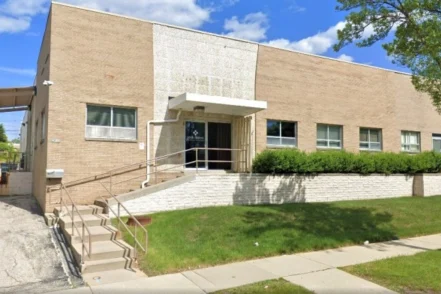
10th Street Comprehensive Treatment Center
4800 South 10th Street Milwaukee, Wisconsin 53221
Treatment Programs
- Alcohol Rehab
- Opioid Addiction
- Drug Rehab
- +4
-
 Oklahoma
GRAND Addiction Recovery Center
6333 East Skelly Drive, Tulsa, OK 74135
Treatment Programs
- Alcohol Rehab
- Dual Diagnosis
- Opioid Addiction
- +4