
Court-Ordered Mental Health Care No More Effective Than Voluntary Care
Published August 17, 2026

For anyone weighing mental health treatment options for a family member with a serious condition, a new state-commissioned evaluation offers a finding worth sitting with.
Court-ordered outpatient care in New York improved outcomes. Voluntary care improved them about as much.
Politico reported the findings on August 3. The evaluation examined assisted outpatient treatment under Kendra’s Law, New York’s involuntary outpatient commitment statute, and arrives while federal policy is moving toward expanding court-ordered treatment nationally.
What the Evaluation Found
The New York State Office of Mental Health commissioned the study at the legislature’s direction, awarding roughly $1 million to the Human Services Research Institute, which led the work with the University of Pittsburgh’s School of Social Work.
The resulting report runs about 400 pages and reflects roughly two and a half years of work, including a first year of community consultation and site visits before formal data collection began.
Assisted outpatient treatment reduced hospitalizations and arrests among people under court order. So did voluntary treatment for people receiving comparable services without one.
Bevin Croft, who directs the Human Services Research Institute’s behavioral health team and co-authored the study, put the conclusion directly.
People engaged in services have better outcomes, and whether that engagement is voluntary does not appear to make a large difference.
The report also raised concerns about access to services, coercion, due process, and the absence of voluntary alternatives, and it documented racial disparities in how orders are applied. The authors recommended the state direct more funding toward voluntary services.
Why Implementation Varies So Widely
Every county in New York uses assisted outpatient treatment to some degree, and the differences between them are substantial.
Approaches vary county by county, and even court processes differ significantly across the state.
That variation is part of why the evidence base has stayed murky for three decades. Involuntary outpatient commitment now exists in nearly every state, with 48 states and the District of Columbia authorizing some form of it as of 2024, but eligibility criteria, order duration, available services, and enforcement all differ.
The state has responded to the report in part by investing $16.5 million annually to help counties improve coordination and oversight.
Mental Health and Addiction Connection
Assisted outpatient treatment orders typically bundle several requirements together. They commonly mandate medication, often long-acting injectables, along with required attendance at outpatient appointments, substance use restrictions, and case management monitoring.
That last set of conditions points to something the policy debate often skirts. People placed under these orders frequently live with both a serious mental health condition and a substance use disorder, and substance use restrictions written into a court order are an acknowledgment of that overlap.
Understanding Dual Diagnosis
Co-occurring disorders, also called dual diagnosis, describe the presence of a mental health condition and a substance use disorder at the same time.
The combination is common, and each condition tends to make the other harder to treat when they are addressed separately.
Integrated treatment addresses both conditions together, with one team and one plan, rather than sequencing them or splitting them between providers.
Research has consistently favored integrated care over parallel or sequential approaches, because a person discharged from psychiatric care into an unconnected addiction program tends to fall through the gap between them.
The study’s central finding speaks to this directly. If engagement with services is what drives outcomes, then the quality and availability of integrated dual diagnosis treatment matters more than the legal mechanism that brought someone to the door.
Treatment Options for Mental Health and Addiction
Behavioral treatment centers vary considerably in whether they genuinely treat both conditions. Some accept people with co-occurring disorders while treating only one.
Residential treatment centers provide the highest intensity of support and can be appropriate when symptoms are unstable or when a home environment is not workable.
Intensive outpatient and partial hospitalization programs offer structure while a person continues living at home. Standard outpatient care suits people who are stable and need ongoing support.
Evidence-based therapies used across these settings include cognitive behavioral therapy, dialectical behavior therapy for emotion regulation and self-harm risk, and trauma-focused approaches.
Medication management runs alongside therapy for most people with co-occurring conditions, covering both psychiatric medication and, where relevant, medication for substance use disorder.
Finding Comprehensive Treatment
If you are evaluating mental health treatment facilities for someone with co-occurring conditions, a few questions separate integrated programs from ones that only claim to be.
Ask whether psychiatric and addiction care are delivered by the same team. Ask who is responsible for coordinating the two.
Ask whether the program will continue treating someone who uses substances during treatment, or discharge them.
Ask what happens at discharge and who arranges the first follow-up appointment. You can call 800-908-4823 (Sponsored) to find out about your treatment options.
Author

Courtney Myers, MS
Read Bio
Courtney Myers has more than 15 years of experience in online writing and editing. Since graduating from N.C. State University with an MS in Technical Communication, she’s helped clients improve their visibility and reach through expert-level content creation. She specializes in addiction recovery and behavioral healthcare topics.
Editor

Eric Owens
Read Bio
Eric Owens has been a writer and editor for various businesses as well as his own successful websites. He has extensive experience creating content in the health and wellness space and the sustainability space. He holds a bachelor degree in Philosophy which helped him with presenting complex information in a simple way that all audiences can understand.
Articles About Alcohol & Treatment
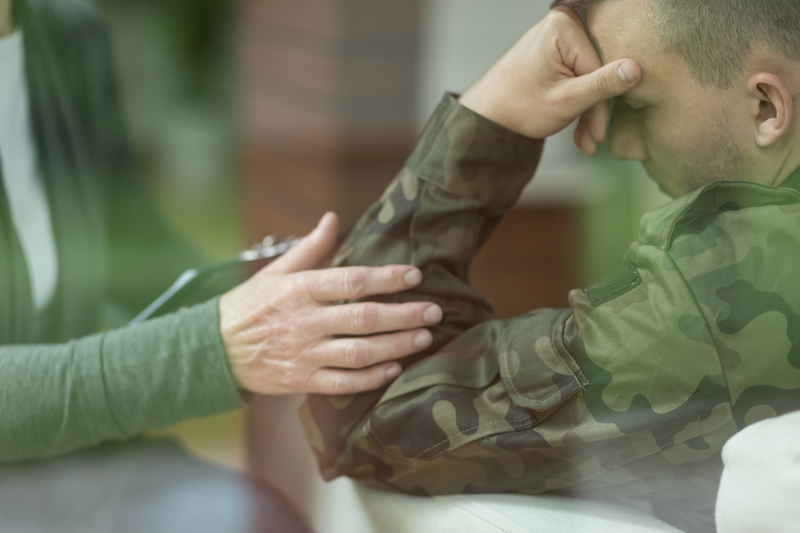
A Guide to Veterans’ Drug Rehab & Addiction Treatment
A Guide to Veterans’ Drug Rehab & Addiction Treatment Addiction is no respecter of persons. It’s an enemy that can strike anyone, anywhere, and at any time. It does not discriminate based on age, gender identity, sexual orientation, color, or creed. It is an equal opportunity adversary. In fact, a 2020 report from the Centers…

How Your Environment Impacts Recovery
How Your Environment Impacts Recovery Learning how your environment impacts recovery is an important lesson to learn. In 2010, I made the terrible decision to get behind the wheel after drinking too many glasses of wine. A couple of miles away from my apartment, I crashed into another car. I seriously injured two of its…

Do the Foods You Eat in Early Recovery Matter?
Do the Foods You Eat in Early Recovery Matter? You may hear folks in recovery with a bit of time under their belt tell you not to worry about what foods you eat in early recovery. In fact, some sobriety literature even encourages carrying around bags of candy to replace the sugar that you may…
Browse Treatment Centers by State
Top National Treatment Centers
-
 Florida
1 Solution Detox – CLOSED
2901 Broadway Ave West Palm Beach, Florida 33407
Treatment Programs
- Alcohol Rehab
- Opioid Addiction
- Drug Rehab
- +0
-
 California
10 Acre Ranch
5953 Grand Avenue Riverside, California 92504
Treatment Programs
- Alcohol Rehab
- Dual Diagnosis
- Opioid Addiction
- +4
-
 Wisconsin
10th Street Comprehensive Treatment Center
4800 South 10th Street Milwaukee, Wisconsin 53221
Treatment Programs
- Alcohol Rehab
- Opioid Addiction
- Drug Rehab
- +4
-
 Oklahoma
GRAND Addiction Recovery Center
6333 East Skelly Drive, Tulsa, OK 74135
Treatment Programs
- Alcohol Rehab
- Dual Diagnosis
- Opioid Addiction
- +4